Convergences: Debatable Lands Vol. 3 – the conclusion of a deep mapping

A new year begins and I want to acknowledge that I have grown rather tired of my academic voice, it’s preoccupations and arguments. I respect it’s right to the views it has set out here, have even admired it for doing so on occasion. But it’s time for a change.

That change will manifest itself in two ways. Firstly, because I propose to allow another, less academic and more ‘writerly’, voice space here. This is the voice that has formed and informed Convergences: Debatable Lands Vol 3. Secondly, because I hope – as I’ve already indicated – to be putting up guest posts by people whose work I admire. A response to a growing need to ‘listen’ more, to make more space for other voices.

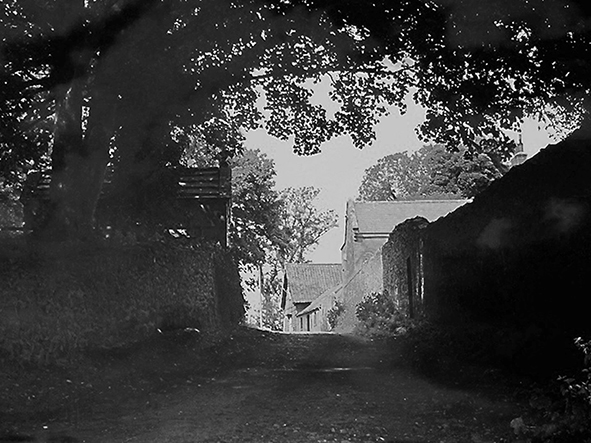
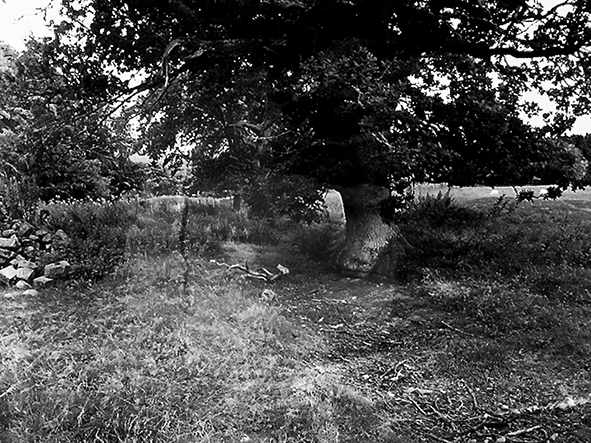
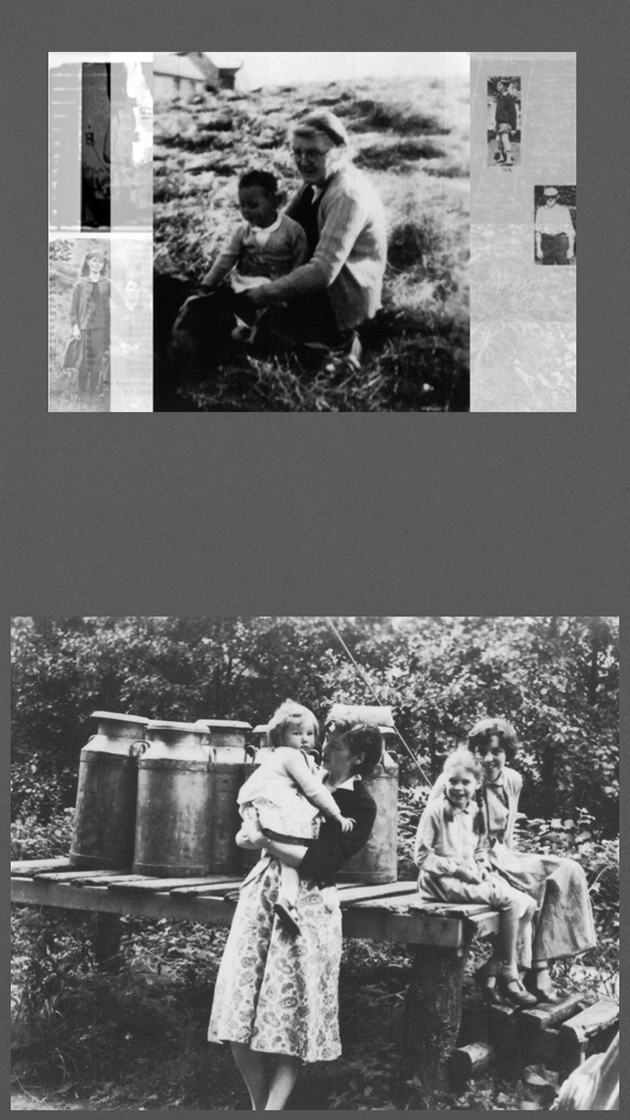
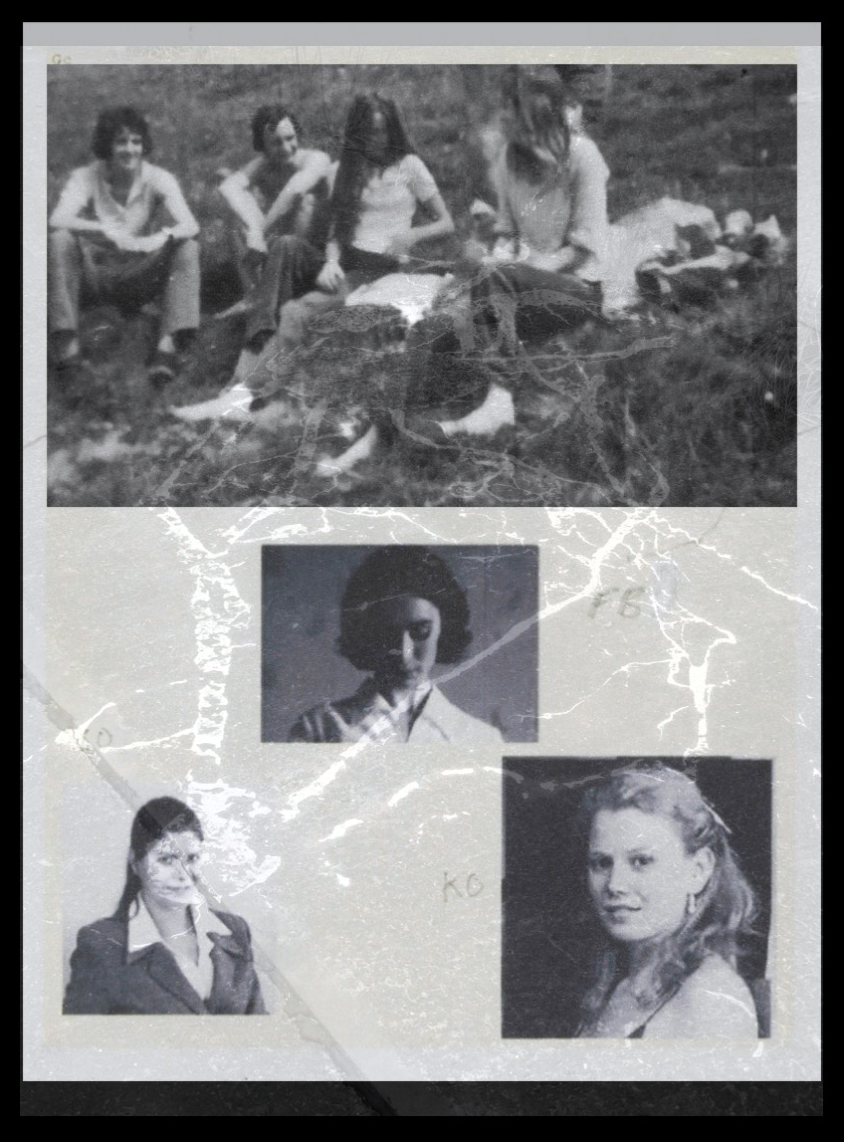
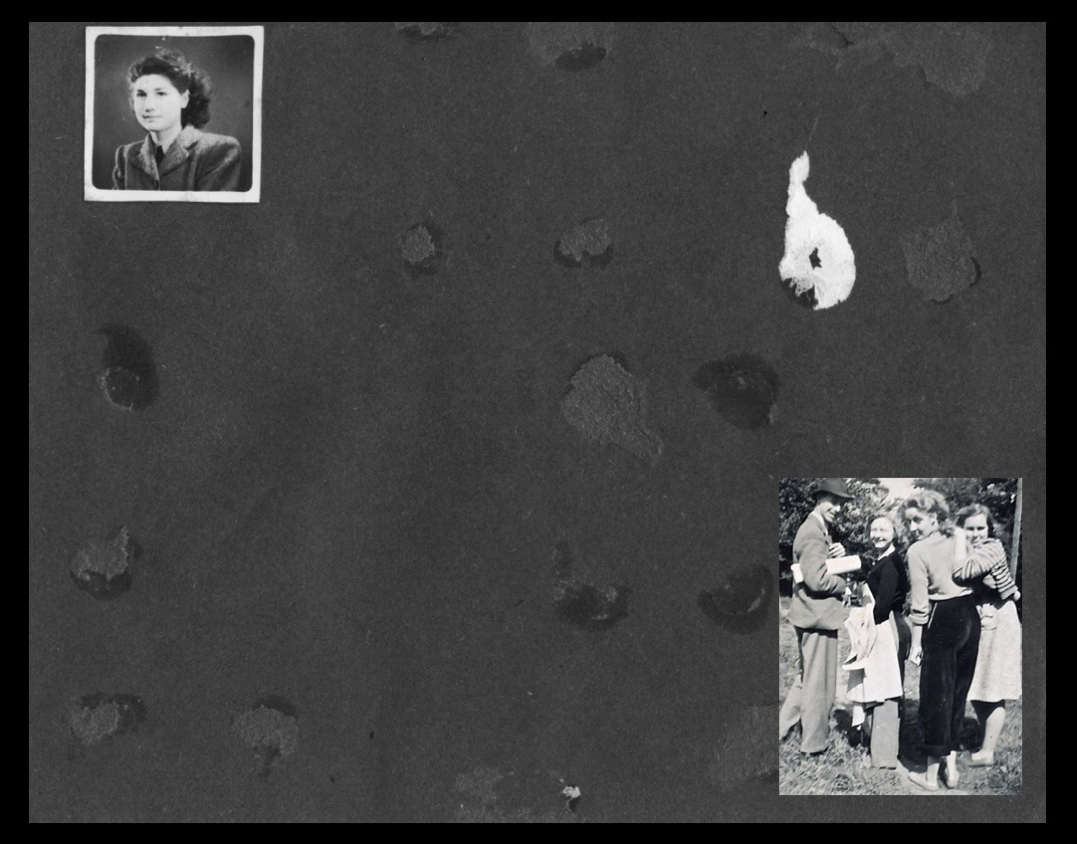
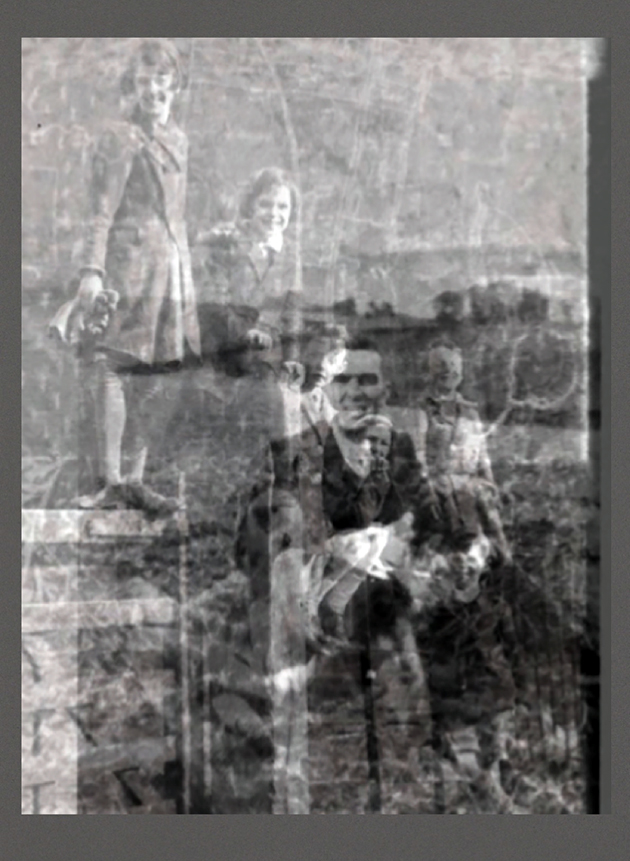
Convergences: Debatable Lands Vol 3  is the concluding work of my Debatable Lands deep mapping project, which goes back to 1999. I began this last part in 2013, when I was recovering from bowel cancer, and it takes the form of a text and image biography of Flora Buchan.

I will be putting some sections up here, but the complete work is now available on request as a pdf .

If you would like a copy, please contact me  at: iain19biggs@gmail.com.

Convergences:

Debatable Lands Vol. 3

 Flora Buchan

compiled and edited by

Iain Biggs 

“Writing, when properly managed … is but a different name for conversation”.

Laurence Sterne[1]


[1] The Life and Opinions of Tristam Shandy, Gentleman Ware: Wordsworth Classics 1996, p. 75.

Simon Read’s Cinderella River, ‘notitia’, and the art of both/and.

Introduction

Cinderella River, the Evolving Narrative of the River Lee (2017) is, taken literally, a case study undertaken by Simon Read as part of Hydrocitizenship, a three-year national research project funded by the UK’s Arts and Humanities Research Council. It is, however, also directly informed by Read’s work as an artist, speculative cartographer, environmental activist and Associate Professor in Fine Art at Middlesex University.

 Cinderella River

Cinderella River is primarily derived from a series of scrupulously documented walks along the Lee, undertaken by Read with students, colleagues or alone. Like any good case study, the book is scrupulously researched, offers astute observations, and provides informed suggestions for practical implementation. The rich and varied material it articulates flows from Read’s informed attention to issues as diverse as water governance, the placement of art in public spaces, limitations inherent in the planning of green spaces and open space amenities, the needs of the local wild life, and so on. A valuable and detailed case study then, albeit one written from a first-person perspective informed by certain wry humour, an unusual breadth of understanding, and enriched by numerous, carefully chosen, images. My concern here, however, ultimately has less to do with the book as a case study than with it being the physical trace of an exemplary engagement, to the point of being a form of deep mapping, with and of the River Lee. In short, I am interested in it as a significant example of ‘the art of both/and’, an inclusive art that helps address: “a deficiency in the mainstream art-based philosophical aesthetics by being truthful to the diverse dimensions [italics mine] of our aesthetic life”, a life lived in a pluriverse in which experience of the aesthetic “is not confined to the artworld and other art-like objects and activities”.[1]

The notion of an art of both/and is predicated on a conversational, relational, and inclusive understanding of the aesthetic, one that recognizes the implications of our living in a pluriverse and set over against the dominant presuppositions of our culture. (Presuppositions predicated on the assumption of a monolithic universe; the same assumptions on which our current university educational system and its research culture is based). Consequently, the art of both/and could be said to be a response to our need to abandon our culture’s reductive naturalism, it’s “faith in a single natural world, comprehensible through Science—or rather, through a mistaken definition of (Western) natural science whose purpose has been to eliminate entities from the pluriverse’.[2] A need that reflects the growing sense of crisis in our psychic, social and environmental concerns.

 Locating Cinderella River as an example of the art of both/and.

 I see Cinderella River as the outcome of different energies moving back and forth across three distinct but semi-permeable ‘worlds’ located in productive tension with each other. These are Read’s own diverse set of creative practices, his long-standing educational engagement as a tutor and lecturer (which he regards as “a duty as much as a congenial way of earning a living”), and the all-too-often Byzantine complexity of the world of State-funded academic research. (In this case, the hydrocitizenship project referred to above).

I’ll touch briefly on each of these ‘worlds’ in turn.

As the Portfolio page of Read’s web site makes clear, his creative work encompasses a diverse range of activities loosely-related practices. These include large-scale art work such as his Thames Profile, commissioned by the Countryside Commission; conference papers and talks relating to his practice and related concerns; a broad range of drawing work; both cartographic and sculptural environmental interventions; and the photographic work produced using hand-made panoramic cameras for which he was originally best known. Much of this diverse set of practices has, however, been directly or indirectly informed by the fact that his home base and studio have, since 1980, been a seagoing barge that has given him intimate access to the East Anglian Coast and its concerns.

Simon Read’s active concern with art education is, in my view, central to the perceptiveness, tolerance, and critical solicitude that permeates the text of Cinderella River. These qualities relate to a rarely discussed and poorly understood distinction between what might be called ‘monolithic’ and ‘pluralist’ conceptions of the artist. The term artist is usually (and misleadingly) taken to refer to somebody whose art practice is their sole or primary source of income and so their exclusive concern. To survive, such a person must negotiate and compete in the fickle, unregulated, and highly competitive ‘art world’ dominated by a global market predicated on conspicuous consumption. Those who wish to engage successfully with this market-driven world must adopt a single-mindedly and aggressively partisan position vis-à-vis their own work and, consequently, engage in continual and often strident self-promotion. The artist (who is also an) educator must, by contrast, constantly negotiate a paradox. She or he must square the circle of maintaining the necessary degree of partisanship to sustain their own practice with the disinterested openness necessary to meet the diverse educational needs of their students. Something of how Read himself squares this circle is hinted at in a section within the book called Walking the Walk. This includes reflections on Read’s introducing fourteen first-year art students at Middlesex University to the sculpture trail known as The Line, which roughly follows the Greenwich Meridian between the Olympic Park and the O2 stadium.

It is difficult to provide any kind of brief introduction to the world of academic research to which the hydrocitizenship project (funded to the tune of over one million pounds) belongs. This is due to the Byzantine complexities and opacity of the academic research world, but also to my own involvement in the hydrocitizenship project itself. (For my views on the early stages on this project, see my posts on 06.03.2016, 18.07.2015, and 11.02.2015). Consequently, I will restrict myself to making one general point here.

This concerns the realpolitik of disciplinarity which still underwrites almost all academic research projects. The Research Councils have, for some time now, encouraged the inclusion of the arts in inter-disciplinary academic research projects, arguably to increase the impact of their outcomes. While there are legitimate arguments for seeing the inclusion of arts elements as extending the reach and effectiveness of discipline-based research, these represent a somewhat partial view.

Arts practitioners have long complained that their inclusion in research projects is often either cosmetic, a means of ‘sexing up’ or rendering more accessible the data provided by ‘real’ research, or as a tacit form of academic ‘neo-colonialism’. That is, as a way of co-opting the aura of the arts, but without addressing the fundamental ontological and epistemological issues that should be raised when they are included in research projects. This leads to the suspicion that the academy is merely using the arts to paper over the cracks in a logocentric system increasingly unable to adequately address the ‘wicked problems’ at the heart of our most pressing psychic, social, and environmental difficulties. In my view both views outlined above contain a degree of truth.

I’m concerned here to think about Cinderella River in the context of this ambiguity, and to point up the book’s significance in relation to the type of research project that occasioned and funded it.

 The ‘art’ of both/and.

“We are always both more and less than the categories that name and divide us”.

Geraldine Finn[3]

In this section I want to offer a brief justification for referring to Read’s book as an exemplary engagement, to the point of being a form of deep mapping, with and of the River Lee. (A claim which, I suspect, will not concern him one way or the other). For reasons already hinted at, this justification is likely to appear indefensible to most artists because it runs counter to the cultural presupposition that art only appears as such in its own exclusive aesthetic space, one entirely ‘other’ to that occupied by such instrumental activities as the production of a case study. While practitioners of the art of deep mapping are likely, almost by definition, to be more inclined to adopt more inclusive notions of what constitutes ‘art’, they too may view my claim as over-extending the notion of what might reasonably constitute a deep mapping.

Put briefly, the justification for my claim is as follows.

In his Preface: Deep Mapping and Spatial Anthropology for the online, open access Journal Humanities,[4] Les Roberts refers to a statement by Jane Bailey and myself in which we describe the process of deep mapping as consisting of: “observing, listening, walking, conversing, writing and exchanging . . . of selecting, reflecting, naming, and generating . . . [and] of digitizing, interweaving, offering and inviting.”[5] He adds that although this “will not apply to all variations and permutations of deep mapping practice”, it usefully signposts “the way that very little of what deep mappers are doing is in fact oriented towards the production of maps”. Rather, he suggests, they immerse themselves:

“in the warp and weft of a lived and fundamentally intersubjective spatiality. It is from that performative platform—that space—that the creative coalescence of structures, forms, affects, energies, narratives, connections, memories, imaginaries, mythologies, voices, identities, temporalities, images, and textualities starts to provisionally take shape”.[6]

In my view, Reed’s book precisely articulates just such a warp and weft of lived and fundamentally intersubjective spatiality. Roberts goes on to add that whether what emerges from the process of articulating that space is a “map” is less important than the process involved; “an embodied and reflexive immersion in a life that is lived and performed spatially. A cartography of depth. A diving within”.[7] On this basis, I feel wholly justified in claiming that Read’s Cinderella River is both a case study and, additionally, the outcome of pursuing the fundamental qualities ascribed to a deep mapping by Bailey and myself, as taken up by Roberts.

This argument pre-supposes a view of the art of deep mapping in which collective relationality, rather than a traditional artistic exclusivity, is taken as central. One in which “listening”,[8] understood as a form of notitia,[9] is the founding principal. Notitia is understood here inclusively, as the exercise of an imaginative facility common to the creative articulation of insight central to the practices of art, education, ethics, and conversation, properly understood.[10] As “a careful attention that is sustained, patient, subtly attuned to images and metaphor”, it is able “to track both hidden meanings and surface presentations”.[11] Neither a technique nor a methodology, notitia constitutes an informed “seeing through” that is “never accomplished once and for all” and which is, of necessity, “slow, observant, and participatory”.[12] In the educational and research contexts relevant here, the practice of notitia is best seen as “an attempt to recover the neglected and perhaps deeper roots of what we call thinking”.[13] This attempt is necessitated by our being “inhabitants of a culture hierarchized by a logos that knows how to speak but not to listen”; the hierarchization designed to restrict our acting between and across the “competing monologues”[14] that make up the academic culture of disciplinarity.

In the context of reflecting on Cinderella River, notitia is understood as related to parrhesia, a classical term revisited by Michel Foucault and often paraphrased as ‘free or fearless speech’. This mode of speaking is intended to: “unearth alternatives to the dominant, post-Cartesian approach to truth as disembodied and objective”,[15] an approach that still dominates the presuppositions on which disciplinary realpolitik is predicated. Zitzewitz characterizes this alternative approach in terms of: “a variety of practices in which truth is dependent upon the ethical disposition of the speaker” [emphasis mine].[16] In this respect, parrhesia sits in direct contrast to notions of professional and academic authority predicated on the rhetorical use of an exclusive discourse that draws heavily on ‘power words’ that derive their authority from the taken-as-given intellectual or cultural positions of an academic status quo. “Parrhestastic speech” is, then, “characterized by the frank and unornamented declaration of … what is in the speaker’s mind”[17]; the product of a person whose spoken or otherwise articulated truth: “is subjective, verifiable not through recourse to claims of expertise” [whether that expertise is conventionally ‘academic’ or ‘artistic’], “but rather through the ethical labour … of the speaker”[18] (ibid). (A point that reinforces the inclusive understanding of notitia as common to both art and ethics). Zitzewitz adds: “The audience accepts these truths because of their relationship of trust with the speaker, a trust that is maintained through the speaker’s exposure to risk”,[19] for example, the risk inherent in setting aside any recourse to claims of a special or elevated position predicated on taken-for-granted professional expertise.

My own thinking in respect to the above draws on Guattari’s conception of the ethico-aesthetic as this relates to parrhesia. That is, in terms of a thinking that derives in part from Foucault’s desire, in the discussion of art, to move its practice “away from an exclusively discursive situation” by placing “parrahesia within the realm of sensible experience”.[20] In terms of Simon Read’s work, that sensible experience is used both ‘artfully’ and to construct a practical case study. That is, it’s located within an inclusive realm of imagining, drawing together, conversing, story-telling, all framed by extensive walking and other bodily practices oriented by the River Lee. An inclusive realm that, in its paradoxical marriage of specificity and diversity, responds to Geraldine Finn’s observation above, that “we are always both more and less than the categories that name and divide us” and, in doing so, is also: “truthful to the diverse dimensions of our aesthetic life”, producing a book that is both a work of art predicated on the expanded aesthetic of notitia  and a case study responding to forms of everyday aesthetic experiences that are: “not confined to the artworld and other art-like objects and activities”.[21]

Notes

[1] Yuriko Saito (2007) Everyday Aesthetics Oxford: Oxford University Press p. 242

[2] Bruno Latour (2004) Whose Cosmos, Whose Cosmopolitics http://www.bruno-latour.fr/sites/default/files/92-BECK_GB.pdf p. 458.

[3] Geraldine Finn (1996) Why Althusser Killed His Wife: Essays on Discourse and Violence Atlantic Highlands: Humanities Press International p. 156.

[4] The Deep Mapping double issue of Humanities (ISSN 2076-0787) from 2015–2016, is available online at: http://www.mdpi.com/journal/humanities/special_issues/DeepMapping)

[5] Jane Bailey and Iain Biggs “‘Either Side of Delphy Bridge’: A Deep Mapping Project Evoking and Engaging the Lives of Older Adults in Rural North Cornwall.” Journal of Rural Studies 28 (2012): 318–28, p. 326.

[6] Les Roberts ‘Preface: Deep Mapping and Spatial Anthropology’ reprinted from: Humanities 2016, 5(1), 5
http://www.mdpi.com/2076-0787/5/1/5 p. xiv.

[7] Ibid.

[8] See Gemma Corradi Fiumara (1990) The Other Side of Language: a philosophy of listening trans Lambert, C London & New York, Routledge.

[9] Mary Watkins (2008) ‘”Breaking the Vessels”: Archetypal Psychology and the Restoration of Culture, Community and Ecology’ Marlan, S (ed) Archetypal Psychologies: Reflections in Honor of James Hillman New Orleans, Louisiana, Spring Journal Books pp. 415-43.

[10] See Monica Szewczyk (2009) The Art of Conversation, Part One e-flux Journal no. 3 Feb. 2009: ‘…if, as an art, conversation is the creation of worlds, we could say that to choose to have a conversation with someone is to admit them into the field where worlds are constructed. And this ultimately runs the risk of redefining not only the “other” but us as well’.

[11] Watkins (2008) op. cit. p. 419.

[12] Mary Watkins (2013) Hillman and Freire: Intellectual Accompaniment by Two Fathers  https://www.academia.edu/13451036/Hillman_and_Freire_Intellectual_Accompaniment_by_Two_Fathers p. 8. (consulted 1/12/2017).

[13] Fiumara (1990) op. cit. p. 13.

[14] Ibid p.85.

[15] Karin Zitzewittz (2014) The Art of Secularism: the cultural politics of modernist art in contemporary India London: Hurst & Co. p. 128.

[16] Ibid.

[17] Ibid.

[18] Ibid.

[19] Ibid.

[20] Thanke quoted in Zitzewitz (2014) op. cit. p. 146.

 [21] Saito (2007) op.cit: p. 243.


A deep mapping and Bristol University’s role in a ‘hidden war’.

Hidden War (with and for Anna Biggs)

Introduction

I wrote at length about the background to this piece of work in May 2013, in a piece on this web site called Performance and intervention (Mynydd Epynt, etc.). I made the work itself – first exhibited at Bristol University –  as the result of my participation in a major research project called Living in a Material World: A cross-disciplinary location-based enquiry into the performativity of emptiness. At the heart of that project were an inter-disciplinary group of researchers drawn primarily from Bristol University, Aberystwyth University, and UWE, Bristol. The work itself came out of a specific field trip, carried out at the instigation of Mike Pearson, to Mynydd Epynt in Powys, mid Wales, in 2007.

It may appear odd to return to this work now, ten years later, but it feels appropriate to do so because the ‘war’ around which the work revolved is no longer so hidden and because, although not strictly a ‘deep map’, the work flowed from the same impetus as my work that more obviously belongs to that genre. It is unlikely that I will have an opportunity to exhibit this piece again but, if I was to do so, I would want to make a substantial supplementary panel that brought it up to date, in conformity with Cliff McLucas’ indication, in Point Five of his There are ten things I can say about these deep maps ..., that no deep map should ever be considered ‘finished’. The rest of this post is indicative of the kind of material I’d need to consider in constructing that supplementary panel. 

Deep mapping hidden connections: academic probity or ‘dirty tricks’.

At the heart of Hidden Wars is an analogy between the training of soldiers in ‘closed’ locations normally off-limits to the public and the hidden machinations used to sustain the misrepresentation of ME/CFS, the chronic illness from which my daughter Anna (to whom the work is dedicated) has suffered for many years.  

Those machinations now include bogus claims of harassment and victimisation by some academics trying to protect poor research work from legitimate criticism. A classic case of this tactic is provided by an article, Threats of persecution, in Views from the Front Line, produced by the notorious Science Media Centre. (The Centre claims: “To provide, for the benefit of the public and policymakers, accurate and evidence-based information about science and engineering through the media, particularly on controversial and headline news stories when most confusion and misinformation occurs” but, as George Monbiot, Jonathan Matthews, and others have shown, is in reality a front for lobbying on behalf of ‘big science’, and a particular school of psychiatry.

Threats of persecution is authored by Dr. Ester Crawley, a highly controversial researcher who is a professor at the University of Bristol. My primary concerns here are not with Dr. Crawley, however unethical her methods of trying to protect her work from legitimate criticism, but Bristol University as her employer. This focus is necessary because the most recent manifestation of this tactic, set out at length in the Voices from the Shadows  blog, highlights Bristol University’s apparent complicity in supporting Dr. Crawley.

This whole situation needs to be understood in a wider context. Universities, never the most transparent of institutions, are now having to do all they can to resist sliding into crisis on a number of levels. Their funding is often precarious and the legitimacy of the size of salaries paid to their senior executives increasingly under scrutiny. Their ability to objectively arbitrate  what constitutes genuinely valuable new knowledge is increasingly in question due to their dependency of government patronage and their economic links to big business. Furthermore, their continued dependence on a disciplinary realpolitik signals their increasingly archaic place in a contemporary society plagued by ‘wicked problems’. (This is nothing new. Senior academics like Ferdinand von Prondzynski, Principal and Vice-Chancellor of Robert Gordon University since 2011, have long been aware of the problems facing universities in this respect. See, for example: http://universitydiary.wordpress.com/2010/10/14/a-post-disciplinary-academy/  and http://universitydiary.wordpress.com/about/). Yet the majority of people, if they think about universities at all, continue to assume that, as instatetions, they are staffed by, and aim to education, individuals trained to be dispassionate arbiters of Truth and Reason.

Part of the difficulty in addressing the mismatch between this assumption and the reality of the situation in universities lies in the fact that too few people grasp the relationship between the academic research industry and the way universities finance themselves. This relationship is of real importance if, as appears to be the case at Bristol, universities start to use bullying tactics to hide the fact that they have received funding for academic research that has been shown, through proper scrutiny, to be unethical, subject to serious conflicts of interest, or just plain bad science. Why a university might be willing to do this is not, however, too difficult to understand.

Universities receive the money gained by their employees to conduct research projects. A substantial part of that money goes to pay for the cost of researchers’ time on the project for which the funding is awarded. The university will, however, almost certainly also be receiving very substantial fees from doctoral students supervised by researchers in the field of the research). The university also takes approximately 16% of the research funding to cover it’s overheads. In a department with many research-active staff, that 16% from each research award will amount to a very substantial sum almost certainly far exceeding that department’s overheads. In addition, every five years the government requires all research to be submitted for audit under the Research Excellence Framework. It then allocates extra money to universities that can demonstrate the quality and value of their research. In short, the business of winning research funding is not only important to a university like Bristol’s public image, it is absolutely central to its economic viability. This being the case, it would not be too surprising that a university might be willing to go to the lengths identified by the Tymes Trust in order to protect their research income and the reputations of those who provide it. Even, apparently, when by doing so they put at risk the ethical and intellectual probity on which their status as a major academic institution ultimately depends.

Obviously finding a way to visualise or ‘map’ this web of material is not easy. However, if deep mapping is to continue as a necessary and relevant form of extra-disciplinary creative activity, then I would need to find ways of doing just that. Of the many kinds of contested ‘place’ within our society, universities are rapidly becoming sites in urgent need of the kind of counter-mapping we can provide. Whether it will be possible to do so, given the realpolitik of the relationship between the art world and the universities is, of course, quite another question.


‘Layers in the Landscape’: deep mapping and the enlivening of culture.

On November 3rd., I drove over to the Trinity Saint David campus of the University of Wales in Lampeter. I wanted to see the Layers in the Landscape exhibition there and to hear my friend the poet, artist and geo-mythologist Erin Kavanagh talk about the extended deep mapping project she has been orchestrating, working in conjunction with the geo-archaeologist Martin Bates and others, in and around Cardigan Bay. Erin’s project employs film, music, poetry, art, geology and archaeology, engaging publics by illuminating the interrelationship of past and present cultural, linguistic and ecological concerns. As such it seems to me to be very much a lively extension of important aspects of the tradition of deep mapping initiated in Wales by Michael Shanks, Mike Pearson and Cliff McLucas.

I don’t intent to say too much more about Layers in the Landscape here, since it’s currently available to see in the Old Building on the Lampeter campus and is well-documented in the project section of Erin’s own web site. Sufficient to say that, in it’s most recent manifestation, it has now included a collaboration with Three Legg’d Mare, a band who specialise in traditional songs of madness, love, death and adventure. This collaboration builds on the fact that, in July this year, the Layers in the Landscape project was extended via an exhibition at Borth Station Museum. This exhibition was focused by the poem King of the Sea Trees, which tells some of the story of a spirit of Cardigan Bay – Brenin Y Coed Mor – a creature born with the land itself and a witness to its long-term changes. The band’s Dafydd Eto has now become the voice of Brenin Y Coed Mor. To do this he took Erin’s poem and revisited the texts from which it catches echoes – something he’s well equipped to do as a Medievalist at the National Museum of Wales – and then applied a variety of different traditional melodies along with his own bilingual interpretations and lines of poetry. (The result can be heard here). All of which gives some insight into the richness and complexity of Erin’s approach to ‘open’ deep mapping.

Erin is involved in ‘open’ deep mappings. (That is, those that have not been co-opted to serve the ambitions of those sections of the academy hoping to benefit either from gaining some advantage in the archaic but no less bitter battle for disciplinary advantage in the fight for every fewer resources or for those available to newly fashionable, hybrid, ‘digital’ disciplines and fields – for example ‘the digital humanities’). This means, in practice, that her project is being developed piecemeal, as and when she can raise the funds necessary to carry it forward. I want to reflect on this by picking up on something she said on Friday evening.

I do not remember Erin’s exact words, only that she spoke eloquently about the ways in which deep mapping as a process, with its managed and serendipitous convergences of unlikely intellectual and material ‘stuff’, becomes an enlivening of culture. What struck me later, talking about the work with my wife Natalie, was that what the collaborations that bring such mappings into being achieve is just that, an enlivening of culture as a lived set of mutable, often contested  and always dynamic, mesh of values intimately connected to a sense of place in which both the ‘global’ and ‘local’ play a part. This is, of course, what ‘place-based art’ is often claimed to do but, as I have increasingly come to understand, in reality rarely achieves. Largely, I think, because the context in which professional artists now work they are required to engaging in a realpolitik predicated on an attitude of cultural exclusivity; one that usually precludes the necessary openness and inclusivity involved in a genuine enlivening of culture in the sense just given. (However, as the current Grayson Perry exhibition at the Arnolfini demonstrates, there are obviously important exceptions to this generalisation).

A consequence of this situation is that, increasingly, those involved in ‘open’ deep mapping, like visual artists whose work is genuinely ‘socially’ or ‘environmentally’ engaged, tend to find themselves caught between the pragmatic imperatives of making a living (however precarious), and the reductive demands of ‘playing the game’ – whether that of the academy or the professional art world. The institutionalisation of an acceptance of the values of total monetisation by both higher education and the ‘culture industries’ as ‘worlds’ inevitably works against any genuine enlivening of culture in its proper sense. Consequently it’s now more vital than ever that we each do all we can to promote and maintain those forms of creative activity that resist that monetisation and all that follows from it. Whether that’s through support networks or whatever other means we still have at our disposal.


Friends

For the last five years I have been working on a text called ‘Convergences’, the last iteration of my ‘Debatable Land’ project. It is an attempt to address what the phrase ‘kith and kin’ might mean to us now.  As I start to bring it to a conclusion, then, the notion of friendship and memory is very much on my mind.  On Saturday I met up with a group of people, including some old friends, to mark one of our number’s departure to China for a year. Perhaps as a result, that sense of being preoccupied with notions of friendship was further reinforced.

To find a poet whose work is new to you and speaks to your heart is to make a new friend. Naturally, having discovered them, you want to get to know their work, to spend time with them. So, having recently come across the poetry of Naomi Shihab Nye and been very moved by it, I wanted to read more. I always feel guilty about buying too many books but, despite that, have now bought several of Nye’s, second-hand, on line. Today the first one, ‘Tender Spot: Selected Poems’, arrived in the post. (My wife then opened it by mistake, thinking it was junk.)

As it happens, my new book has a hand-written dedication on the flyleaf, as follows:

For Pinar and Memet, new friends – with all my heart of respect and pleasure!

You shine!!

Love, Naomi Shihab Nye

While I was making dinner, peeling the carrots and preparing the spices for the cauliflower dish my daughter particularly likes, I wonder about Pinar and Memet. At first, I was just puzzled, wondering what, after such an effusive declaration of friendship on Nye’s behalf, prompted them to sell or give away this book that is now mine. Did the friendship simply fail to blossom? Where they just indifferent to her poems? Did they all have a falling out? And just who are Pinar and Memet anyway, and what was it they did that made them shine?

Then, as I prepare to soak the cauliflower, I remember Naomi Shihab Nye’s wonderful prose poem ‘My Perfect Stranger’. (It makes me laugh out loud and then cry each time I read it.) Her perfect stranger is a five-year old who ends up in the seat in front of her. already a poet and artist. She wears a lacy white party dress, has a little tuft of pink hair, and her fluting voice. The clear, unselfconscious voice that Nye fears might announce their shared identity as Arabs, sitting on an American flight to San Francisco, to all and sundry. So, she doesn’t share the knowledge of their common identity with the child. And, at that point in my wondering about Pinar and Memet, my speculations suddenly become edged with fear for them.

How easy it is for me to idly imagine the disposal of a book in terms familiar to me. A friendship that faltered and withered. or perhaps simply failed to blossom in the first place; an indifferent to someone’s work, or a falling out. But, of course, there are many other, externally imposed, reasons why Pinar and Memet might have had to let the book go. After all, I know quite enough about the difficulties of simply moving one’s family to a new house. (Last time we did that I felt obliged to cull my library by about a third.) How much worse, then, to be faced by exile then, to be forced to ‘travel light’, to leave valued friends and possessions behind simply because you have no other option?

Of course, I still know nothing about Pinar and Memet, beyond the simple fact that Nye saw them as new friends, as people she respected and whose company gave her pleasure, who shined. Yet at this point it seems hard not to care about, even fear for, these two strangers who mattered to a poet whose work I admire.

‘In Praise of Wetlands’ and ‘The Crow Road’.

In Praise of Wetlands (wall piece, 2017)

I have just returned from three days in Sheffield working with Midstream (a collective made up of my friends Mary Modeen, Christine Baeumler and myself). We contributed work to the exhibition In The Open, curated by Judy Tucker, which she organised in association with Cross Multi Inter Trans: Biennial Conference of ASLE-UKI and LAND2. which took at Sheffield Hallam University.

Midstream contributed an artist’s book and the wall and sound piece reproduced above. (A study for this piece, along with a statement, can be seen on the exhibition page on the LAND2 website.) Midstream also presented a collaborative paper, also called In Praise of Wetlands, delivered in three parts.

In addition, Erin Kavanagh and I presented a ‘performed paper’ entitled The Crow Road. Erin is a poet and photographer, artist, archaeologist and academic based in West Wales. She shares my interest in deep mapping and employs poetry as archaeological method for public engagement.     The presentation employed a Powerpoint of her crow drawings, poetry, stories and academic thinking and, I’m pleased to say, was very well received.


Working for a poetics of place

While shopping in Hexham in preparation for the Bank Holiday, I bought a book in Eland’s ’Poetry of Place’ series, Highlands and Islands (2012), edited by Mary Miers. I picked it up because of my ongoing desire to reorient my work in relation to evoking place. I’m trying to combine elements of the relatively ‘prose-oriented’ approach of my former deep mapping work with a small-scale approach that’s closer to the visual ‘poetics’ I associate with the best painting. (In addition to paintings I’ve long admired – particularly by Paula Rego, Ken Kiff and R. B. Kitaj’s early work – I’ve also been looking very carefully again at the work of Prunella Clough, Helen Frankenthaler, Peter Lanyon, and various others).

This project is not, of course, simply about starting to make painted constructions that try to evoke place. It seems to me to require, among other things, adopting a degree of critical solicitude towards reflecting on the complex of family and social circumstances that lie behind my own preoccupation with the Scottish Highlands and Islands. That preoccupation, which has brought with it an abiding concern with upland farming communities throughout the United Kingdom, is central to my work as a visual maker and a writer. Such complexities and their implications seem to me inseparable from considerations of place and so must be addressed if one wishes to distinguish between work that engages with landscape and work that tries to evoke a sense of place.

That thought is prompted by my reading Highlands and Islands. Scanning through the book I found Kathleen Raine’s Message to Gavin (1969), a reminder of both the doomed relationship between the poet (Kathleen Raine) and the novelist (Gavin Maxwell) and of my own contact with them both in late childhood and early adolescence. (A visit with my parents to Camusfeàrna, as Maxwell called his Sandaig cottage, made a very powerful impression on me, as much because of the difficulty of finding that beautiful place, and the size of his two dogs when we did, as with meeting the author of Ring of Bright Water. Among other encounters with Kathleen Raine, her withering dismissal, delivered in her tiny Chelsea flat, of my adolescent preference for Rothko paintings over those of Bacon, is equally memorable).

There is much like about Highlands and Islands. It contains, for example, unexpected work I did not know. This includes a poem by T. S. Eliot – Rannoch, by Glencoe –  which illuminates a place I know, both from childhood journeys and a memorable trip with my two sons, and is part of an ongoing conversation with friends. I also find the book helpful in terms of thinking about reorienting my own work, particularly the way in which each poem is contextualised. This contextualisation serves to remind me of all the different ways in which a poem is grounded in, grows out of, and interacts with, lives that unfold in all the weave of richness and complexity that makes up place. Not just the way in which Hugh MacDiarmid’s A Little White Rose counterpoints his thinking with that of W. B. Yeats, and is taken up by Alex Salmond, but the whole politics of landownership. And so the ways in which these interact with the presuppositions of class, entitlement and attitudes to relationships to the inter-woven-ness of personal, social and environmental realities.

A good deal to think about then.

‘Greening’ the Borders: a personal meander through questions of agriculture, woods and wetlands


Borders mixed woodland


Introduction

Around mid-summer I spent some time visiting various mosses and other wetlands in the English / Scottish Borders. These included Ford Moss, a lowland raised mire to the south-west of Berwick-upon-Tweed; the three Whitlaw Mosses just east of Selkirk; and the Gordon Feuars Moss, a wet wood, just outside the village of Gordon.

This last is a very particular place, the remnant of a large floodplain mire dominated by a low tangle of birch and willow growing over a variety of fen and bog peatland habitats. It appeared entirely un-managed and, as such, made me think it might be some of the last “natural” remaining native woodland in Britain. However, on looking at a large-scale map later, I found that there are drains marked as running through two sections of the reserve: Gordon Moss Nature Reserve itself and the neighbouring strip known as Minister’s Bog. However a third area, Laird’s Bog, appears to be undrained, suggesting that there has been only minimum human intervention in the area in the past. That was certainly my impression ‘on the ground’.

What interests me is not, however, whether or not such a place is in some sense “pristine’, but how it fits into the shifting politics of land ‘improvement’ and environmental concern that is now starting to shape the Borders landscape.


Marker on the edge of Gordon Fears Moss.


In the ‘Laird’s Bog’ wet woodland at Gordon Feuars Moss

Wildness

A 2006 report – “A Borders Wetland Vison” – compiled for the Scottish Borders Counciltells me there are eleven distinct types of wetland in the region – blanket bog, lowland raised bog, fens or flushes, reed beds, coastal and floodplain grazing marsh, wet woodland, lowland meadows, upland hay meadows, purple moor-grass (Molinia), rush pasture, and lochs. All of these are environmentally important. (Peatlands, for example, reduce global climate change by acting as carbon sinks that capture and store carbon from the atmosphere. Twenty percent of the world’s terrestrial carbon is captured and stored in peatlands located in the northern hemisphere). I have two related reservations about this report’s neat definitions, however. The first is that surely one of the important qualities of wetlands is psycho-social rather than environmental as that term is usually understood – their quiet ‘wildness’ in Don McKay’s sense of that word. That is, their capacity “to elude the mind’s appropriations” (2001 p.21), even those provided by scientific organisations like environmental research consultancies. My second, related, reservation is that, in practice and perhaps somewhat ironically, it’s precisely human intervention that so often makes a nonsense of any such neat distinctions. (Wet woodland, precisely because it occurs as small areas of wood or localised patches in larger woods on floodplains, as successional habitat on fens, mires and bogs, along streams and hill-side flushes, and in peaty hollows, many of which border on cultivated agricultural or other land, often combines elements of many other ecosystems).

Repairing the old sheep fank on the Carter Burn near the entrance to Burns in the Wauchope Forest area.

Sign marking the entrance to the Burns.

The image of an old sheep fans above is located in what was once an area of upland hay meadow.  It may originally have been bounded by wet woodland similar to that at Gordon Fears Moss and subject to regular flooding. The fank, however, is a product of the move towards land enclosure and the introduction of large-scale sheep farming. Then, beginning in the 1920s, sheep farming in this area was increasingly replaced by forestry, particularly the monoculture of Sitka spruce that now dominates the Wauchope Forest. Over the last eighteen years, I’ve watched this remnant of old upland hay meadow being further transformed; overrun by a mixture of bracken, reeds, and the beginnings of what may become a ribbon of deciduous wet woodland. While this process of change will continue one way or another, how it will fit into the wider pattern of future Borders land use is an open question.

The Midstream Collective

The Midstream Collective (left to right: CB, IB & MM)

I took the journeys indicated above because I wanted to get a sense of these wetland places ‘on the ground’ and to collect images. I was working towards a celebration of wetlands with my friends Christine Baeumler (an Associate Professor of Art at the University of Minnesota) and Mary Modeen (an Associate Dean at the Duncan of Jordanstone College of Art and Design at the University of Dundee) for presentation at a conference in September. These are my partners in the Midstream Collective, which we set up some years back to ‘badge’ the collaborative work we wanted to do together.

As so often happens when I visit new places, the explorations with one end in view have set me thinking about another – land use on the Borders, both past and present – which in turn provoked this essay.

Ford Moss and its woodland


Ford Moss Nature Reserve sign

Ford Moss from the south-east

The Ford Moss Nature Reserve, wedged between a mix of farm land and old forestry plantation, is a Site of Special Scientific Interest (SSSI) that sits in the hollow of a hill overlooking the Till Valley and the Cheviots. The Moss extends over about one hundred and fifty acres and is classified as a lowland raised mire. That’s to say its ecology is underpinned by a deep peat layer laid down by the rotting of vegetation over many thousands of years. The moss has become dryer over the last 250 years, but retains echoes of its older landscape form, which is undergoing ‘renovation’. The nature reserve includes old mixed woodland that’s adjacent to the moss and contains both mature Scots Pine and Oak.

I was unable to walk into the moss itself, which is fenced to keep people away from its “soft and treacherous surface”. Instead, I (largely) followed the circular two-mile path around its edge. The wildlife, particularly the birds, were present from the start, as indicated by the variety and volume of bird song, most noticeably of thrushes, blackbirds and skylarks. The persistent call of a buzzard hunting high over the moss accompanied me for much of the second half of my walk. I also had the luck to encounter a Roe doe at close quarters.

Broken snail shell – evidence of a thrush’s activity?

A buzzard calling high over the moss

Roe doe caught unawares

As I started walking around the moss, it struck me that the mature Scots Pine and Oak woodland bordering its southern side and situated on an incline, echoed descriptions of woodland I’ve read and thought about a good deal in the past.

Mature woodland on the slope to the south side of Ford Moss

This is the old woodland of the Jed Forest that had once covered an area of land called the Wauchope Forest, now largely taken over by commercial forestry. That area that interests me sits north and west of the Carter Bar pass on the Scottish side of the Cheviot Hills. (This is well down the Border to the south-west of Ford Moss in the old Middle March). The area I’m particularly attached to consists of three parallel low ridges with the Carter and Black Burn running between them into the Jed Water.

What came to my mind was that the woodland at Ford Moss was almost certainly of the same type that persisted, probably with relatively little change, from around the time of the end of the Roman occupation to some point in the late eighteenth or early nineteenth century, when the Lowlands were ‘improved’. (Jennifer Owen, in her magisterial Wildlife of a Garden: A Thirty-Year Study, suggests that by 400 AD. only 30% of England was wooded, although the percentage would have been considerably higher in the Borders). I regularly visit this area between Carter Bar and the former parish of Southdean when I’m in the Borders and have done so for almost twenty years now.

The politics of land use

The remains of Tamshiel Rig, photographed c. 2002. Fifteen years later this site, if it still exists at all, is completely inaccessible due to the density of the Sitka planting. 

I stopped in Jedburgh on my way from Ford Moss to visit the land around Tamshiel Rig – a medieval shieling built on the site of what was once one of the best-preserved Iron Ages farms in Britain (until it was plowed up for forestry). While I was there I bought a copy of Peter Aitchison and Andrew Cassell’s The Lowland Clearances: Scotland’s Silent Revolution 1760-1830 (Tuckwell Press, 2012).  Like so much historical research into social conditions in rural Scotland, it’s a stark reminder of how issues of social justice, ownership, and land use are intimately linked, of the complexity of those links, and of how the language of ‘progress’ has been used to justify the imposition of ‘top-down’ changes that have had long-standing consequences. (The authors reckon that the ‘improvement’ of Lowland agriculture traumatised, displaced, or otherwise disrupted, the lives of almost one third of the population. These were for the most part cotters, the poorest members of Borders society. In this context, it’s important to know that even today more than half of Scotland is still owned by less that 500 people, a situation with enormous socio-environmental consequences.

Two views reported in the book are relevant to my visit to the former parish of Southdean, where the population has been steadily declining year on year. The first is that of an establishment orthodoxy that views the enclosures and the improvements of the late eighteenth and early nineteenth centuries as a mark of unqualified progress. For that orthodoxy, the creation of “big new farms in place of common grazing” not only “completely altered the landscape of Scotland”, it ushered in the new, scientific agriculture essential to Scotland entering the modern industrial age (p. 72).

The second view is that of the historian Dr James Hunter. Hunter is Emeritus Professor of History at the University of the Highlands and Islands, was the first Director of its Centre for History, and the author of thirteen books about the Highlands and Islands and that region’s diaspora. He was the first director of the Scottish Crofters Union, now the Scottish Crofting Federation and is a former chairman of Highlands and Islands Enterprise. Unsurprisingly then, he contrasts the “empty deserted glens” central to large-scale Lowland sheep farming and “kept going solely by vast, enormous subsidies from Europe”, with “the unimproved parts of Scotland … the crofting counties”, where “you see a much more viable society”. (p. 148) He also suggests that the people who resisted the ‘improvements’, where, from the perspective of our present eco-social situation, those with the better, more sensible, more economically and environmentally viable vision of the Scottish landscape than the “few subsidy junkies” who now dominate “rural Scotland where improvement was given full reign” (ibid).

Lindean loch information board.

Lindean loch.

The historical link between the loss of wetlands and ‘improvements’ of various kinds is neatly illustrated by what’s known of Linden reservoir or loch, located just east of Selkirk. Prior to the eighteenth century, this would have been the lowest, and possibly most extensive, of what are now collectively known as the Whitlaw Mosses. (The remaining three are ‘Murder’, ‘Beanrig’ and ‘Blackpool’ Moss).

Whitlow moss, looking west towards Lindean Loch

Whitlaw Moss.

Although the loch looks ‘natural’ enough today, it is in fact the product of two major human interventions. As a standing body of water, it’s largely the result of the extensive extraction of lime rich marl (a form of clay), dug by hand during the eighteenth century. Marl that was then used as fertiliser locally to improve the grass necessary for intensive grazing. Then, in the twentieth century, the loch was dammed to provide a public water supply for nearby villages, a situation that continued into the nineteen seventies. Now notable for its lime-rich water and soil, and for the six hundred and more plant and animal species apparently found in and around it, the loch was designated an SSSI in 1977.

Rethinking woods and wetlands – Kielder, Wauchope and other commercial Borders forests

Clear-felled area of hillside north of Kielder


Clear-felled area at Burns in the Wauchope forest

Given my long-standing interest in the area just north west of Carter Bar, someone familiar with the area would probably expect me to visit the Border Mires, the name given to a collection of peat bog sites in, and adjacent to, Kielder Forest in Northumberland, rather than the mosses I in fact visited. After all this area was, until planting began in the 1920s, predominantly open moorland and mire, with remnants of native upland woodland – some of it wet – along stream sides and in isolated craggy areas. Now it’s the largest man-made forest in Europe, with three-quarters of its six hundred and fifty square kilometres covered by commercial forestry, of which seventy-five percent is Sitka spruce. Like all such forests, it is a depressingly monotonous and oppressive environment that, typically, sustains very little in the way of wildlife and provides little employment.

There are, however, fifty-eight separate peat bog sites within the overall forest area. These are in remote locations and largely made up of deep lenses of peat located in larger areas of blanket bog. They can be up to fifteen meters deep in places and are almost all dependent on rainfall to maintain their water-balance. Taken together, they store more water than the Kielder reservoir itself, the largest artificial lake in the United Kingdom, which holds forty-four billion gallons, figure that reminds me forcibly of the importance of peat bog in the retention and general management of water, particularly in relation to flooding.

Kielder Water reservoir.

My problem with trying to visit the Border Mires sites is that, not only are they almost all in very remote areas, but they are also designated SSSIs and require permission to visit them. Given the contingencies of our family situation and of factors like the weather, this simply isn’t practical for me. So, over the years I’ve spent time in the area of Scotland just over the border from Kielder in places I would call ‘wet edge lands’. That is, places that historically have been radically reconfigured by climate change, then by human enclosure and, later again, by the forestry practices used to create the current forest monoculture.


The Black Burn, it’s banks damaged by industrial scale clear-felling, is now producing marsh-like areas along its upper length. These are frequently flooded and almost always remain waterlogged. 

Roadside drainage ditch running into Carter Burn (2017).

The management of water in this area is now wholly determined by the needs of the forestry industry, in particular the quick and effective extraction of large volumes of timber. Crude roads built for this reason often disrupt the natural flow of water and, as a result, have a substantive impact on the two burns.  The new drainage ditch pictured above now above runs directly into Carter Burn, and over time will almost certainly impact on its course and water quality. If it speeds up lateral erosion it may undermine the bank that separates the burn from the nearby pool and, in doing so, substantially change the course of the burn.


A standing pool, perhaps originally created by the silting up of an old flood meander in the Carter Burn, also shows some evidence of having been dammed at some point, perhaps to provide water in connection with the nearby fank shown earlier.


The Carter Burn valley

The images above are indicative of the area in which I go to walk, look, listen, and remember; that is to find ways into the numerous processes that produced, and are still producing, this landscape.

What’s to remember here? Many things, but in particular the continuous processes of both sedimented and sudden change. Before it was ploughed up and obliterated to plant forestry, there were the extensive and perhaps best preserved archaeological remains of an early Iron Age farm anywhere in Britain located just above Black Burn. For some three hundred or so years either side of the start of the Christian era, there is evidence that a milder climate made it possible to grow a primitive form of barley here.  Later, in the medieval period, a bothy or sheiling called Tamshiel Rig was built near the site of the Iron Age farm. This provided shelter for those who tended the cattle that grazed here on the rich upland grasses each summer, part of a local agriculture based on transhumance. And to the east of the Rig, if local names are anything to go by, herds of swine once foraged for acorns in the oak woods and wallowed in the high mires above.

Why remember all this?

Because it tells us that present forms of land use are neither ‘natural’ nor inevitable. They are determined by the concerns of landowners and, as James Hunter indicates, there are always alternatives. That alternatives to the early modern culture of ‘improvement’ are now once again on the political agenda is clear from the Scottish Green Party’s policies.


A Borders cow and her calf (2017)

A Borders pig (2013)

Relevant Scottish Green Party policies: an indicative summary

 The Scottish Green Party’s manifesto commits it to working to ensure that Scotland’s land benefits the many and not the few, and that to establishing transparency as to exactly who owns Scotland. It also argues for a radical programme of land reform to transform the social, economic and environmental prospects for communities across Scotland. To achieve this, it is committed to supporting such proposals as providing agricultural tenants with a right to buy their farms in appropriate circumstances, and to ensuring that public subsidy is directed at those in most need of it and to support the expansion of new sustainable forestry. All of which goes against the grain of the modern culture of ‘improvement’.

The Party is also committed to increasing local community control over public land and to working towards greater democratic control of the National Forest Estate and of property currently administered by the Crown Estate Commissioners. It is similarly committed to promoting community agriculture, involving a step change in making land available for smallholdings, with a shift away from high-input agribusiness to low-carbon, organic farming.

This dovetails into  its proposal to support farming that provides public benefits, including rural jobs, water management, biodiversity, carbon sequestration, and shorter food chains. It aims to foster links between communities, local farmers and food co-operatives. It also recognises the need to support new farmers from non-farming backgrounds in getting access to the land and finding opportunities to build experience in environmentally and economically sustainable farming. It is committed to supporting large scale ecological restoration projects of native flora and fauna, including the continued restoration of internationally- important peatlands. Again, these policies largely go against the grain of the modern culture of ‘improvement’.

In principle at least, all these policies point to what could be a radical transformation of the Borders region, its agriculture, woodlands and wetlands.

A ‘wild’ speculation

So, what might an alternative Borders landscape look like? What, over and above Green policy, is needed to shift the Borders back to reflect something of the ‘unimproved’ landscape values that James Hunter identifies with a contemporary crofting culture, for example that of the Sleat peninsula of the Isle of Skye? The policies of the Green Party, if put into practice, would open the way for the establishment of a hybrid between traditional small-scale subsistence agriculture, alternative sustainable forestry practices, and the contemporary possibilities of tourism and other forms of income such as I’ve seen at first hand on Mull. However, the implementation of Green Party policies would require a radical political shift that would be resisted tooth and nail by those who own or are dependent on the big Borders estates. This suggests that there is little or no realistic possibility at present of reversing the depopulation of the Borders or of breaking the stranglehold of ‘subsidy junkies’; not just the owners of big farm estates and heavily subsidized grouse moors, but the many absentee landowners whose return on investment in commercial forestry depends on subsidy. However, we do not know what the impact of Brexit will be on the subsidy culture.

If I was asked to identify a point of leverage that might nonetheless help to move this process on, I would argue for the ‘re-wilding’ of the vast forestry monoculture of Kielder forest and points north of the Border. By this I do not mean aping a few wealthy individuals to import beavers or wolves onto their private estates. My sense of re-wilding owes more, as already suggested, to Don McKay’s understanding. Not, then, the re-introduction of a single large mammal but, as a start, small-scale human projects designed to reestablish areas of mixed forest, mire and moorland in the vast monocultural hinterlands of commercial Sitka spruce cultivation. Not, however, as stand-alone projects, but as part of a wider eco-tourism and cultural/environmental education initiative build in consultation with local people, particularly those young people anxious to remain and earn a living from the land.

The artist and environmental activist Cathy Fitzgerald has ably demonstrated, through her Hollywood Project, that it is both ecologically desirable and practically possible for an individual to learn how to gradually convert commercial forest monoculture to fully sustainable mixed woodland. What is needed is, above all, opportunity and a desire for environmental change. Given a multi-stranded approach that, for example, seeks to go beneath and beyond the macho reiving-related culture so heavily promoted across the Borders, it should be possible to start to construct a multi-stranded and locally grounded basis – looking both back to a ‘pre-improvement’ agricultural past and forward to new, technologically-enabled possibilities, a basis equivalent to James Hunter’s vision of renewal on Skye.


‘After’ academic knowledge: towards other understandings?

Three academic observations to start with, all taken from Poul Holm et al’s Humanities for the Environment—A Manifesto for Research and Action (Humanities 2015, 4, 977–992). They note that: “while empires may collapse, [including, in this context, those of academic institutions] humans do not, and have managed successfully to reorganize themselves in extremely adverse times” (p. 984). The second draws on Helga Nowotny’s view that the current move to: “socially robust knowledge includes employing multiple, even contradictory, perspectives” (ibid. 985). Finally, the article’s authors observe: “We want to emphasize the capacity of the humanities to move beyond models of research that locate the formation of knowledge exclusively within the academy” (p. 986). These three indicative observations will serve to frame the context for what follows here.

Some of the people I most admire, people who struggle to do the real work of tertiary education (rather than passively conforming to the priorities of Academia plc), recognise that the dominant disciplinary realpolitik that covers the economics of education has long been an anachronism. These people are working hard to find ways to teach what now needs teaching; in particularly an ecosophically inclusive thinking that listens and is critically solicitous towards other understandings and towards the world at large.

One way in which they have done this is by moving away from the presuppositions and assumptions of the disciplinarity mentalité, creating enlarged fields of multi-disciplinary study oriented by collectively substantive and common concerns. So, we now have, for example, Memory Studies, Landscape Studies, Geo-Humanities, Digital Humanities, and Eco-Humanities. Given the recuperative ‘neo-colonialist’ practices of disciplinary empire-building, and the concomitant proliferation of ‘inter-‘, ‘trans-‘, ‘post-‘, and other neo-disciplinary formulations, I remain agnostic about many of the claims made on behalf of these expanded fields by those who head them up. What I am convinced of, however, is that a growing number of people who work for universities are using these new categories as portals through which to enter conversations that go beyond the academic and, in doing so, contest the assumption that academic disciplines are the prime locus of knowledge production and understanding. People who now act on the assumption that it is the openness, the skills, goodwill, knowledge and understanding embodied by individuals, not the authority bestowed by the official categories that institutions use to divide and rule, that are now central to creating knowledges and educational experience that’s fit for purpose.

This does not mean, of course, that the work such people do as academics is somehow secondary to their individual characteristics. Rather it means that we need to see their academic work as just one part of the wider polyverse that constellates them as both an individual and a semi-porous cluster of psycho-social relationships. And, as I’ve argued elsewhere, the same can be said of those who work as artists.

I want to suggest that the struggle for us all, now, is to resist the normative conditions that flow from the internalisation of a monolithic notion of ‘life-as’ some form of professional specialist, for example ‘Academic’ or ‘Artist’. That is, a unitary belief in a ‘life-as’ as authorized by a disciplinary education, one taken as the means to a job organising, legislating for, administering, and generally intervening in, the intellectual, cultural, or practical conditions of others’ understandings and/or lifeworlds. A ‘life-as’ underwritten by the administrative mindscape of the dominant culture of management, whether in relation to business, public services, the media, the creative industries, or the academy.

If we accept that socially robust knowledge requires that we employ “multiple, even contradictory, perspectives”, then we need to begin by acknowledging that we are each a polyverse, and then acting accordingly. This means acting not as a monolithic entity categorised as ‘Academic’ or ‘Artist’, but as a plural and dynamic constellated self that works as, for example: a teacher, an academic researcher, a writer, an activist, an artist – not to mention all those forms of work that flow from being one’s parents’ child, a partner, a citizen, a parent, a neighbour, a family member, and so on.

We badly need to recognise that we are all, in reality, just such constellated selves.

Some years ago, when I had a residency at NUI Galway, I had the good fortune to meet Gearóid Ó hAllmhuráin,  an Irish ethnomusicologist, author, musician and historian who is hugely knowledge about Irish music, diaspora, cultural and memory. The inaugural holder of The Johnson Chair in Québec and Canadian Irish Studies at Concordia University, Montréal, Quebec, Gearóid is a fourth generation Clare concertina player, a former member of The Kilfenora Céilí Band, and a five-time All Ireland Champion musician, someone who has performed and recorded with both many noted Irish fiddlers and the French Canadian fiddle master Pierre Schryer. Equally important, however, is that he is an open, intellectually enquiring, enthusiastic and generous conversationalist, someone who was happy to talk to, offer advice to, and practically help, a chance-met English teacher / artist / researcher with an interest in Irish socially-engaged arts practices but almost no knowledge of Gearóid’s own many areas of expertise.

The approach to our work I’m arguing for here, as I have done in more detail elsewhere (see my ‘“Incorrigibly plural”? Rural Lifeworlds Between Concept and Experience’ Canadian Journal of Irish Studies Vol. 38, Nos. 1+2 (2014).
Special issue, “Text and Beyond Text: New Visual, Material, and Spatial Perspectives in Irish Studies” pp. 260-275), is informed by a sociological argument that differentiate between two distinct ways of experiencing lifeworlds. In the first, lifeworlds are experienced as given, framed by prior understandings of roles, expectations and rewards that produce a ‘life-as’ an academic, an artist, a farmer, a housewife, a postmaster, and so on. In the second case, they are experienced as a (relatively) open project: multi-stranded, dynamic, as ‘being-as-becoming’ in which skills and understandings flow from productive tensions between different embodied perspectives .” This distinction is, of course, never absolute, but might be seen as approximating one made by the philosopher of place Edward S. Casey. Casey differentiates between a position, taken as “as posit of an established culture,” and our experiencing of place which, notwithstanding its normally settled appearance, he characterizes as “an essay in experimental living within a changing culture.” These parallel understandings can indicate a spectrum across which lifeworlds are experienced, from the given or positioned — whether assumed as such by individuals themselves or imposed upon them by powerful others— which constitutes a ‘life-as’, through to a becoming that requires continual negotiation as to how we are placed in relation to a world always in process. Our experience will, in fact, show us that we fluctuate back and forth between these two poles. If the first position is best described as a given and unitary position, the second is dynamic, experimental, and plural: as located in a “polyverse”—a term borrowed from the late theologian Roger Corless, both a Benedictine oblate and a Gelugpa Buddhist, who uses it to articulate his experience of the richness of both these spiritual lifeworlds without denying the irreconcilable differences between them. Which returns us once again to Helga Nowotny and the view that the current move to socially robust knowledge requires the ability to include multiple, even contradictory, perspectives.

The ebb and flow of our lived experience back and forth across a fluidly constellated lifeworld or polyverse is rarely acknowledged because it raises a host of questions that cut across the normative assumptions our culture has inherited from the monotheistic traditions of the Religions of the Book; difficult questions about identity and self-consistency that open us to increased levels of paradox and cognitive dissonance. However, if we deny the lifeworld as polyverse, with its corresponding sense of plurality and internal difference, we will have to live with the negative social consequences that follow from that denial. These include substantive restrictions on our capacity to deal with change, with the complex, even wicked, problems typical of our age and, centrally, on our ability to accept the plurality and difference of others – in particular, others whose skills and forms of lived understanding do not sit well with particular conceptions of a unitary ‘life-as’. Nevertheless, as I began by observing, many people increasingly experience their lifeworld as a polyverse—whether they do so tacitly or explicitly—and are both managing the resulting cognitive dissonances and welcoming the new understandings that result from abandoning the unitary world of the professional ‘life-as’ Artist, Academic, or whatever.

Practicing the GeoHumanities: some thoughts.

I spent yesterday in London at the invitation of Professor Harriet Hawkins, a geographer and art historian, who works in The Royal Holloway Centre for the GeoHumanities. She had invited Jen Harvie (QMUL), Neal White (Westminster University) and myself to act as a panel for a GeoHumanities in practice event – Practicing the GeoHumanities: the practice-based thesis and beyond – intended for doctoral students, potential doctoral students, ‘early stage’ and other post-doctoral researchers. (The event was made possible through Harriet’s seemingly boundless energy and enthusiasm and by support from The Royal Holloway Centre for the GeoHumanities Royal Holloway Centre for the GeoHumanities, AHRC Creating Earth Futures project, and AHRC TECHNE doctoral Training Centre).

Harriet took the portmanteau term ‘GeoHumanities’ as naming an increasingly common intersection of the practice and scholarship of the arts and humanities with geographical scholarship and practice, focused around such topics as environment, landscape, place, identity, and mobility. As she rightly notes, a growing amount of such work is being done through practice-based or practice-led PhDs, a good proportion of which are based in Geography departments. The practices involved are various and include creative writing, poetry, visual and socially engaged arts practices, creative curation, and so on. The day workshop provided us, that is those working on practice-led or practice-based PhDs on geographical topics and those with congruent interests, with the opportunity to think and speak together around the various challenges and benefits of these ways of working.

My impression was that those who attended the day gained a good deal of useful support and information from the opportunity this event offered. However, rather than discuss the specifics of the day, difficult to do in brief, I want to draw attention to some general points that strike me as significant at this juncture. (That is, given what is now my almost eighteen years involved in the praxis of practice based/led research).

  • On the evidence of this event, supervisors and doctoral students now have a much more sophisticated understanding of the experimental possibilities – both formal and intellectual – of the practice-based or practice-led PhD. Also of the regulatory issues and disciplinary realpolitik that frame and, all-too-often, still limit those possibilities.
  • Closely aligned to this is a much greater involvement (and again I am largely going on the evidence of this event), in working in the ultimately political ‘spaces-between’ academic and professional knowledge production and ‘extra-academic’, ‘extra-professional’, ‘vernacular’, or ‘subaltern’ forms of understanding and practice. This might be characterized theoretically in terms of Guattari’s concern with transversality and an ethico-aesthetics, although I suspect that to do so would lead all too quickly to sterile debate on the slippery slopes of High Theory, rather than to the kinds of psycho-social and environmental engagements in evidence yesterday.
  • It still seems to me significant that, as I would have predicted, almost all those attending the event were women. I think this was also significant in relation to the day’s total absence of theory-based gamesmanship. There may be any number of reasons for this, of course, but I am increasingly inclined to see both facts as relating to the emergence of a new mentalité. (This is related, but not reducible to, the effects of Feminism. If I were to try and set out in detail my own reasoning about this, I’d need to go back to an old essay: The Conversational Weave (another place) – see http://www.iainbiggs.co.uk/text-the-conversational-weave-another-place/), and to a recent book chapter – ‘Re-Visioning “North” as an ecosophical context for creative practices’ in Timo Jokela & Glen Coutts (eds) Relate North: Culture, Community, and Communication 2017, Rovaniemi, Lapland University Press – as starting points).
  • I am not sure whether the following observation may involve a degree of projection, but it seemed to me that, underlying the whole event, there was a commitment, mostly tacit but sometimes explicit, to radical pedagogy in the spirit of Paulo Freire. A spirit that was manifest in many of the projects themselves but also, perhaps less noticeably, in discussions around supervision. Within any academic context this is itself significant, since any concern with pedagogy is normally treated as, at best, marginal when research is the topic of academic conversation.
  • The issue of language and writing, present in many of the presentations and conversations in relation, for example, to questions of acknowledging polyvocality, the articulation of experience, and the limits of disciplinarity, needs further discussion. Those of us who have practices that don’t privilege the analytical over the narrative, imaginal or poetic, are haunted, and often harried, by the conventions and presuppositions of analytical academic discourse as the authoritative mode of thinking. This situation requires some very careful and radical work if we are to understand the problems it brings. I will simply indicate one aspect of those problem here.

In an article entitled Stepping from the wreckage: Geography, pragmatism and anti-representational theory – Geoforum 39 (2008) 1600–1612 – Owain Jones (Professor of Environmental Humanities at Bath Spa University) offers a highly sophisticated philosophical account, based on non-representational theory in geography, which sets out to articulate:

The dissatisfaction … with the ongoing trajectories of enlightenment/modern aspirations of progress towards truth through the elimination of doubt and the application of reason, language and power in the dividing, sorting, representing and fixing of the world.

Jones’ aim here is to support and develop the move to “theory and research as creative action” in geography. But there is an inherent paradox. These theories set out to repudiate the epistemological error Jones identifies by, among other things, engaging “with the techniques and presentational forms of the creative arts”. However, their authority as geography theory remains almost wholly unrelated to the types of authoritative evocation manifest through arts practices. Instead it depends on using philosophy (the “queen of the sciences”) to re-conceptualize – that is finally to re-divide, re-sort, and re-represent – previous discursive positions within the ongoing competitive discourses of academic geography. Its exponents may quite properly write of ‘escaping the wreckage’ of the logocratic order but, in practice, they are simply perpetuating that order. Should they genuinely adopt forms of articulating understanding based on evocations that employ the techniques and presentational forms of the creative arts, their authority, status, and perhaps even their employment, as High Theorists of contemporary Geography would almost certainly be in jeopardy. They do not (and perhaps cannot risk) doing  in practice what they speak about philosophically.

This may seem an unfair criticism, given the inevitable location of “non-“, “anti-“ or “more than” representational Geographies within the necessary limits of academic discourse and the realpolitik that sustains it. Unfair unless, that is, we start to look at other models that offer genuine alternatives to this kind of writing. The title of Donna J. Haraway’s Staying with the Trouble: Making Kin in the Chtulucene already indicates an important difference in language and orientation from Jones’ article. While Jones wants to step away from the wreckage – the standard academic move to gain the necessary distance on which analytical critique is dependent; Haraway wants to stay with, remain immersed in, the trouble. Jones cites philosophy, or the philosophically-underwritten position of other geographers, to authorize his thesis. By contrast, Haraway cites her direct engagement in or with an eclectic mix of science studies, anthropology, political theory, storytelling and specific arts practices, to authorize hers.

So in her book, we find a vibrant polyvocal exchange, a wild and inclusive conversation in which her own experience and involvement speaks with Isabelle Stingers’ thinking and Baila Goldenthal’s painting Cat’s Cradle/Sring Theory; where Ursula Le Guin’s notion of science fiction speaks with Hannah Arendt’s political vision; and The PigronBlog team’s project and a “Bee Orchid” cartoon by xkcd speak with Bruno Latour’s anthropology. Here there is no Art (capital A) and no Authoritative Academic Discourse (capitals A, A and D), assumed as exclusive positions, one set over or against another. In short, Haraway’s writing evokes a ‘walking in practice’ of what Jones can only identify in terms of a philosophical position within a conventional discourse; one that is authoritative only in so far as it remains firmly within a set of  presuppositions inseparable from the realpolitik of the academic status quo.

I would suggest, then, that if the new terminology of Geo- or Eco-Humanities is to mean anything, and if there are to be practice-led or practice-based doctoral projects by people who can develop that meaning into forms of lived praxis, then we need to continue to act on the conversations that Harriet initiated yesterday.