Creating convivial places – towards another politics?

IMG_0962

In these increasingly uncertain times I am more and more impressed by the way in which people I meet are managing to continue to make ‘convivial places’ that serve to grow or support forms of community and mutual support – ‘places’ that exist solely through the coming together in good faith of people engaged in creative action. This form of ‘making’ seems to me one basis for what we might call another kind of politics and some of the most valuable creative work we can do. Indeed, if some theorists are to be believed, it perhaps lies at the heart of the creative conversations that we undertake when we engage in the work (verb) of art.

Recently the most obvious example of this kind of work for me has been The Showroom Projects with whom Mel Shearsmith and I (representing PLaCE) worked on the Walking in the City project. (http://www.inthecityseries.co.uk – see my last post and Walking In The City). The three main people involved are Alice Tatton-Brown, Hannah Sullivan and Martha King, who describe themselves as ‘creative practitioners and producers’. Something of the spirit of this enterprise is suggested by the description of Alice Tatton-Brown’s role: “Alice is currently looking after finance and development at TPS, though like Martha and Hannah, she too can also be found cleaning the spaces, emptying bins and filling holes in the walls” (http://www.parlourshowrooms.co.uk/thetea/). Not to mention, at least in Martha’s case, taking on other low-paid work so as to help keep body and soul together). Alice is also soon to perform Ariel – part audio walk, part installation, and part performance – an intimate story told and retold in Exeter Central Library (19-26th October).

It might be argued that what I admire in these three women is simply indicative – a working in the kind of hybrid, ‘in-between’ psychosocial space that is occupied, willingly or unwillingly, undertaken by innumerable artists who have both to subsist and sustain their practice by multi-tasking, creatively and economically. While that may be true, it risks missing the particular outward-looking, enthusiastically engaged and intellectually curious quality of the ‘convivial place’ these three have managed to create at the Parlour Show Rooms. It is this creative conviviality, perhaps more than anything else, that we now need as a society and that Bristol City Council risks disabling when it dispossesses The Showrooms Projects later this year.

Notes towards a deep mapping of Bristol

IMG_1041

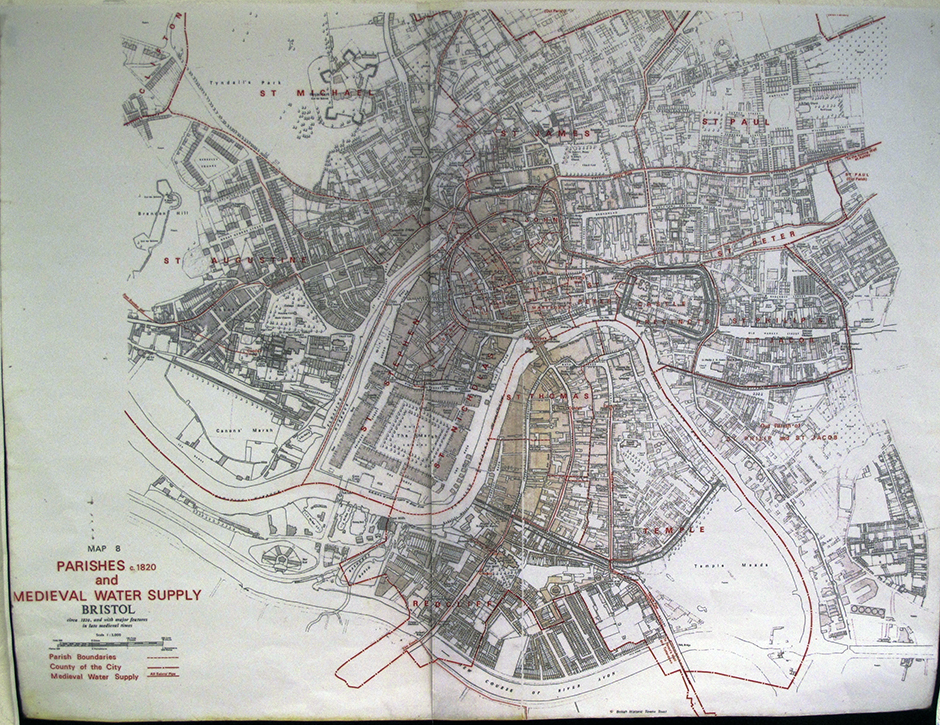
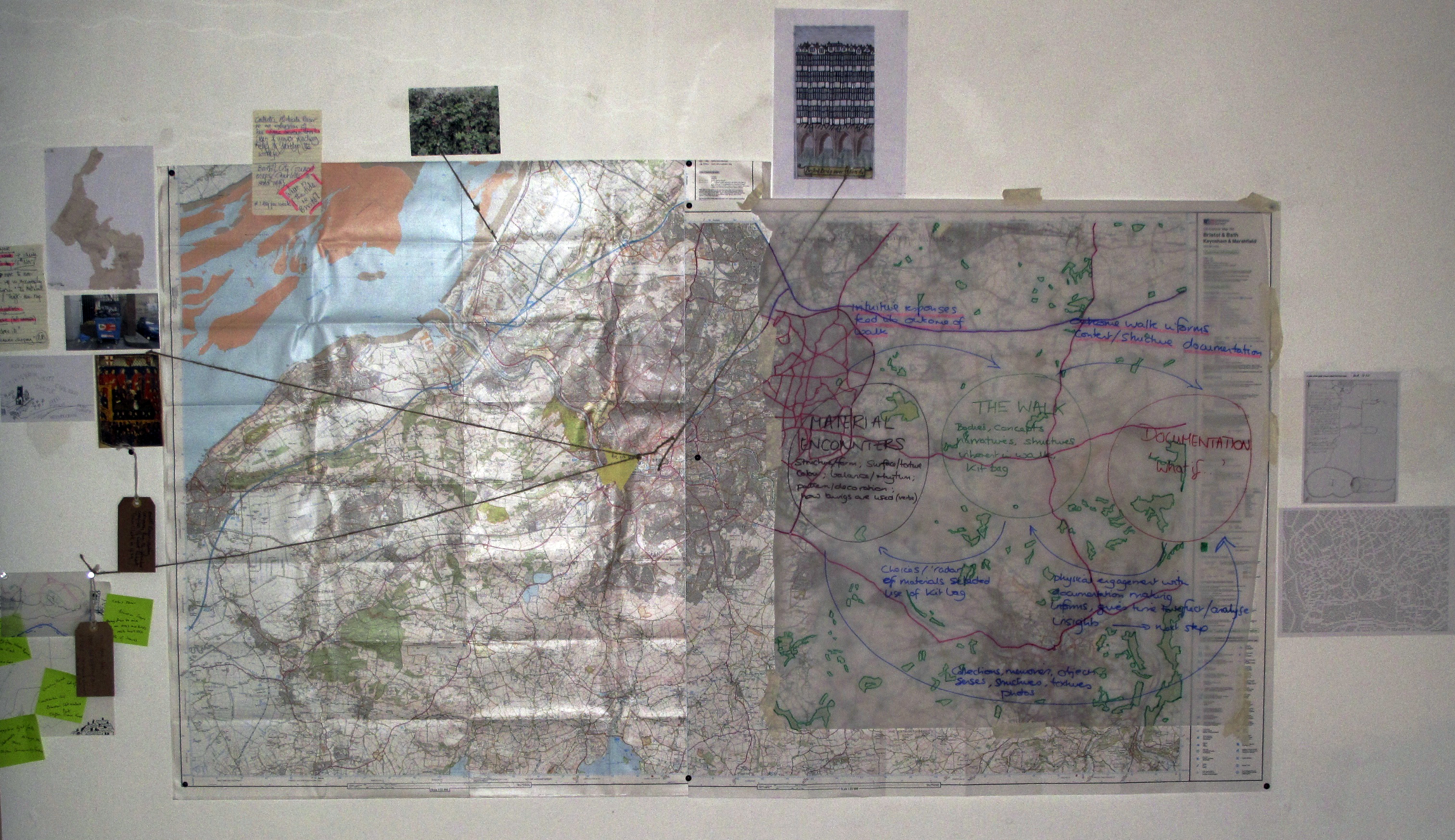
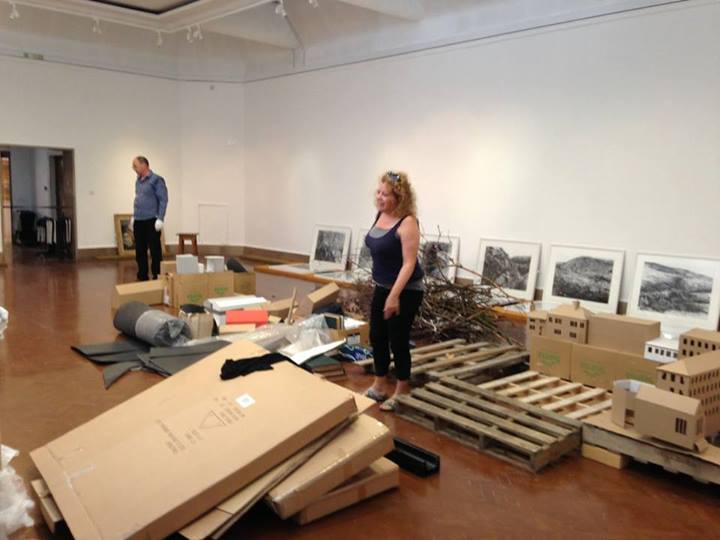
PLaCE has just engaged with the wonderful Parlour Showrooms on the Walking in the City programme – something very much driven by Mel Shearsmith’s engagement and enthusiasm. As part of the four day event Sue Maude (above) and Sarah Rhys (with myself providing some backup and support) spent some time working on preliminary notes for a deep mapping of Bristol, using the old city and issues of waterways as two key focal points. The public response was wonderful and between us we had a great many interesting conversations with the public. (That Bristol City Council has failed to extend the Showrooms’ tenancy of the building on College Green beyond December shows, in the light of reports like Jocelyn Cunningham’s ‘Knitting Together Arts and Social Change” (RSA), just how unbelievably insular, short-sightened and reductive local government officials can become. I do wonder who made that decision, on what kind of ‘informed’ basis, and how those involved in the council’s arts policy where involved, given the massive level of support for the Showrooms work. That we will never get open answers to those questions tells us a great deal about how cities are run).

IMG_0895

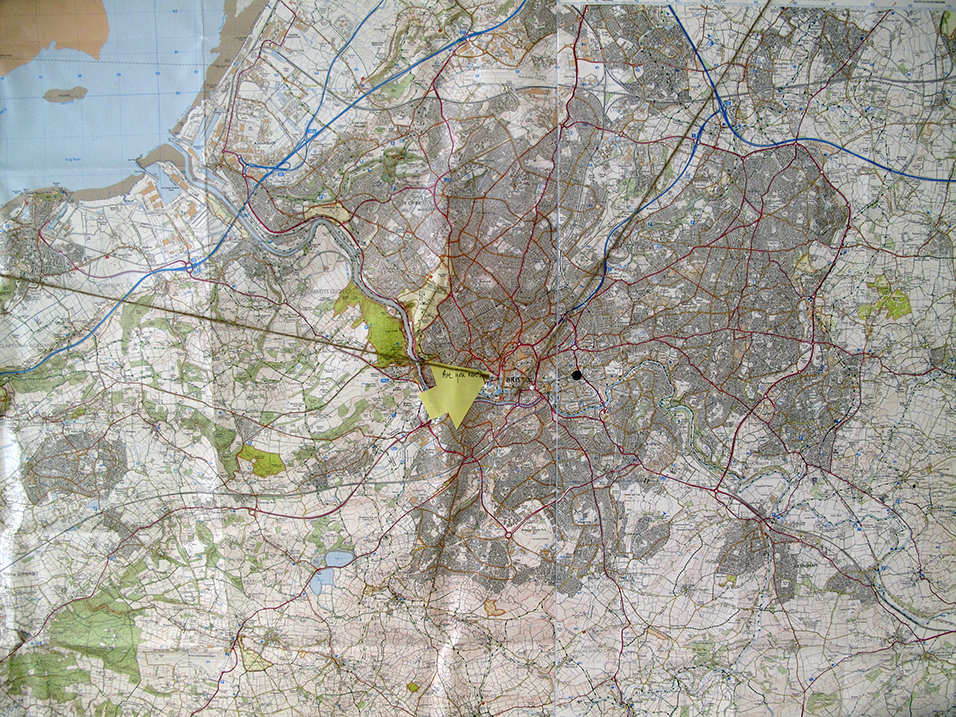
For me our mapping process started with a simple reversal – from the usual ‘You are here’ to the question: ‘Are you here”? we have begun to identify some of the historical and contemporary resonances and tensions that help to “make up” Bristol (see my comments re Bristol City Council above).

IMG_0912

Are you here?

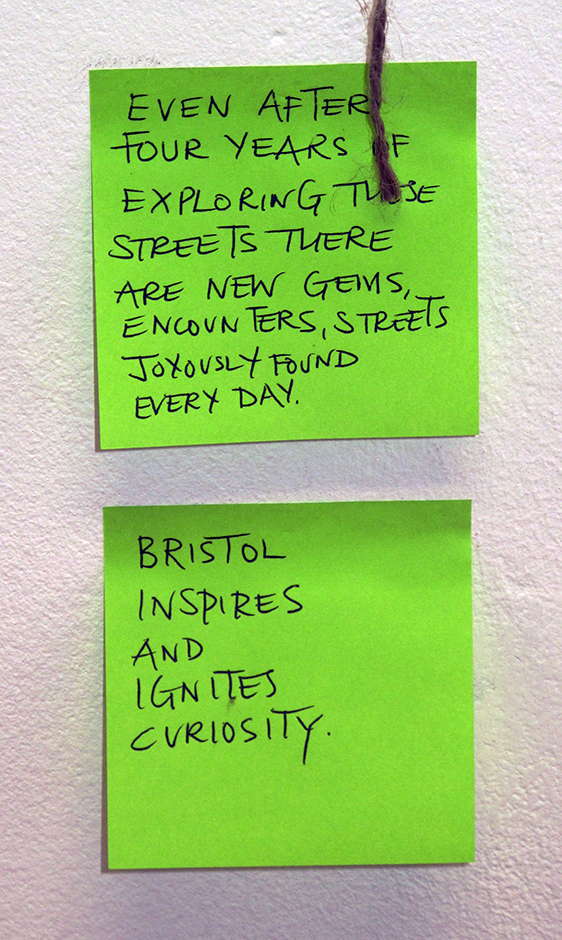
Perhaps the most enjoyable aspect of this work has been the engagement by members of the public – a mix of young and old, of local people, new arrivals, and tourists. Their responses have ranged from that of a New Zealand archaeologist who lectured me on the inequalities by which the arts “get all the funding”, and then “rip off” archaeology, which is condemned for “just” being about”heritage” through to the woman who wrote the following for our mapping:

IMG_1026

More on this as I digest the rich brain and heart food that the last four days have provided, but one of the pleasures has been the way in which working simply and as a team in the context of the Showrooms, which enabled us to appropriate very interesting related material.

IMG_1044

More thoughts on ‘transgression’ at 300 meters plus above sea level

IMG_0852

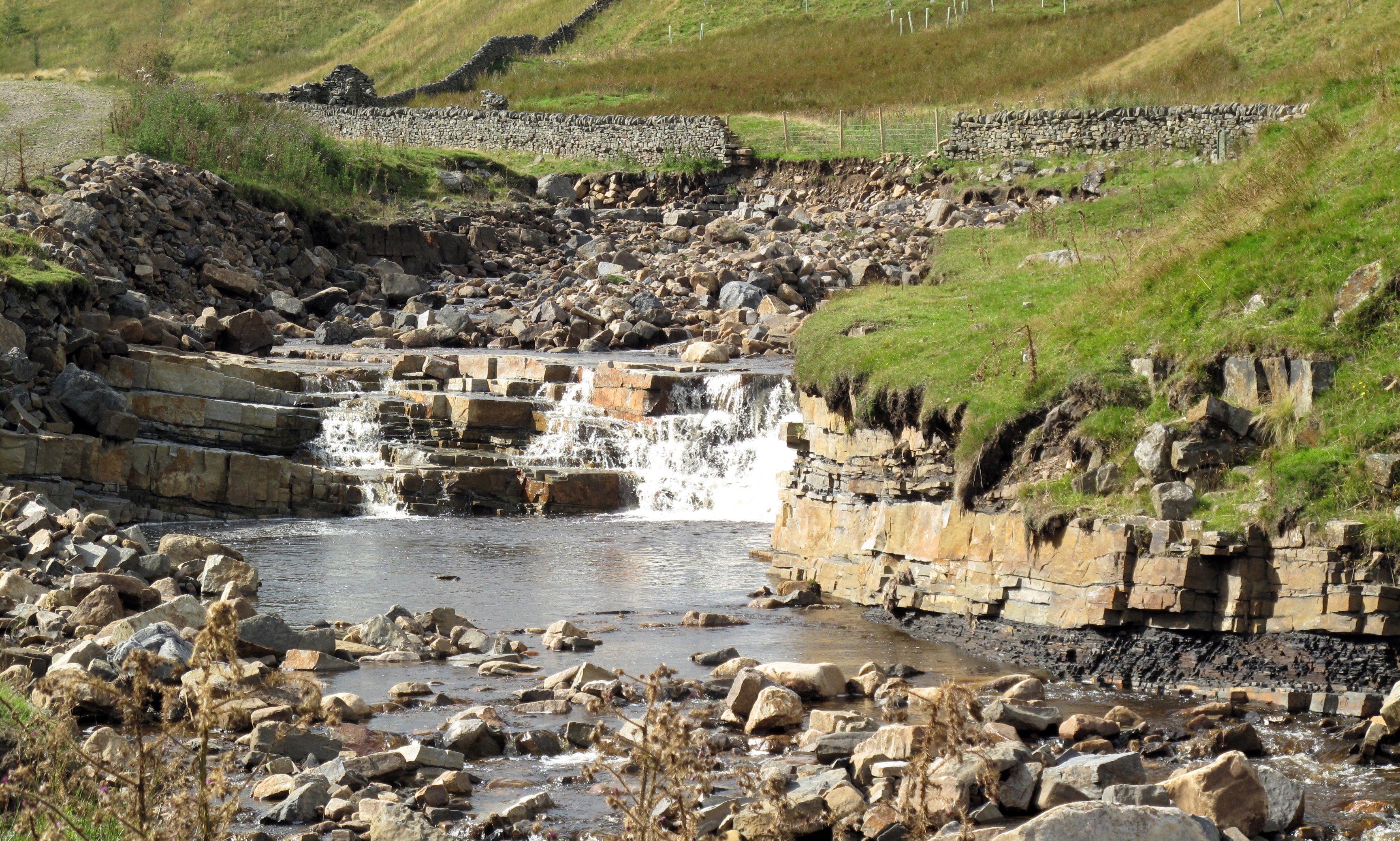
This waterfall is just over 300 metres above sea level on the Hopeburn stream that feeds into a large reservoir in Weardale, Co Durham. Walking here you quickly find evidence that the rock in falls over was once seabed.

IMG_0838

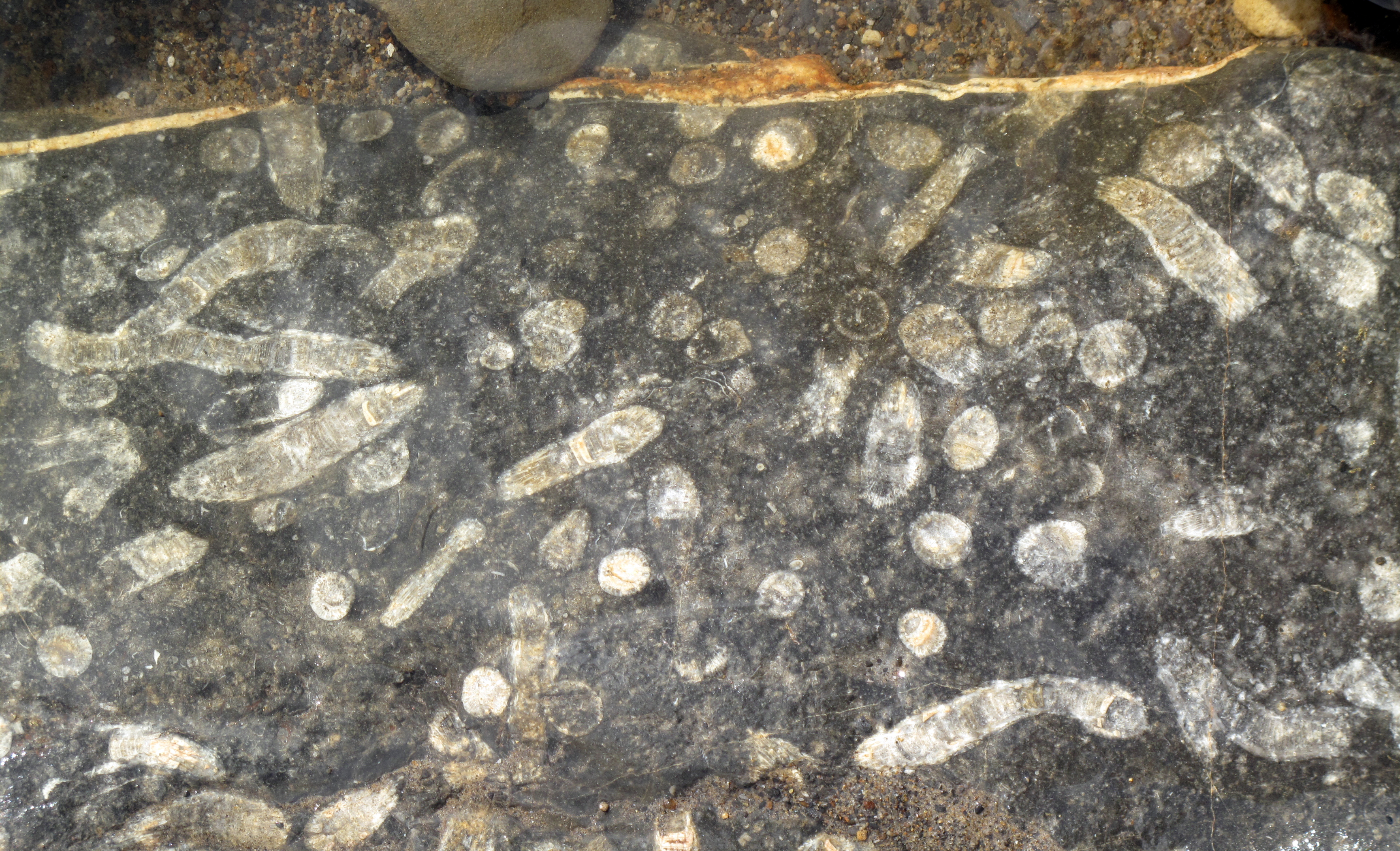
This hard limestone is close to what is known locally as “Frosterly marble”, columns of which can be found in Durham cathedral.

IMG_0847

Obviously I was delighted to find this on one of my “home patches’, with geological transgression on my mind as it is at present.

While we were walking in Co Durham the other morning my wife Natalie asked me how my project work with Antony Lyons was going. We then got into a conversation about language – the term ‘transgression’ in particular and related terms more generally. As our old friend the artist Simon Read often points out, the language around marine transgression is essentially military – we either ‘defend’ coastlines or we ‘retreat’ in the face of coastal erosion or flooding. However, this way of thinking seems increasingly unhelpful in terms of finding more creative approaches to the ecological issues we now face, given that man-made marine transgression is becoming a more and more serious problem in terms of the future.

What we need, I believe, is to start to think transversally, to shift our language use so that it is oriented to an attitude of cooperative adaptation and celebration. This might prepare us to make better use of what, for example, is beginning to emerge in terms of rethinking coastal management in the USA.

A recent article on natural forms of protection against the more extreme forms of storm damage in coastal areas points out that in the USA: “Coastal forests, coral reefs, sand dunes and wetlands are just a few of the natural habitats that protect two-thirds of the US coastline from hazards such as hurricane storm surges”. That is to say, a situation that can be seen as supporting plans to move beyond over-reliance on engineered solutions such as levees or seawalls. The survey to which the article refers to is designed to look at the cost-effectiveness of conservation-based protection such as wetland restoration and dune creation, along with other protective factors such as coral and oyster reefs, wetlands, dunes, seagrass beds and kelp forests (see http://www.nature.com/news/natural-defences-can-sharply-limit-coastal-damage-1.13380). This same shift may already have started in a small way in parts of the UK, where coastlines are managed by organizations such as the National Trust.

Anyway, my conversation with Natalie has got me pondering language and, for example, the link between ‘transgress’ and ‘ingress’ as relevant to our thinking about the geopolitics of climate change and to transgression in a geological sense. One online dictionary gives the following relevant definitions of ‘transgression’, of which the one around which our project is based is the third:

trans·gres·sion  (noun) – 1. A violation of a law, command, or duty: “The same transgressions should be visited with equal severity on both man and woman” (Elizabeth Cady Stanton). 2. The exceeding of due bounds or limits. 3. A relative rise in sea level resulting in deposition of marine strata over terrestrial strata.

But it seems to me that the second sense of transgression is also relevant to discussions we’ve been having about climate change, changes in sea level, and the need for adaptation. What Natalie was pointing out to me is that, although the concept of transgression appears to be very much rooted in religious thinking, when seen from a scientific perspective the results of climate change, which are too rapid to allow for adaptation, are also said to ‘transgress’ in so far as they exceed what might be regarded as ‘due bounds or limits’ – but only if we assume a world understood from a gradualist evolutionary perspective. These assumed limits are in reality unrelated to anything ‘natural’ – such as, for example, a tree’s tolerance of the saline content in ground water. They relate only to a particular human perception of what constitutes ‘acceptable’ time-scales and limits, given a particular theory of how nature should behave!

Which brings us to the related term: ‘ingess’.

IMG_0836

in·gress  (noun) – also in·gres·sion: 1. A going in or entering – 2. Right or permission to enter. 3. A means or place of entering.

At the risk of appearing rather pedantic, it is possible to imagine starting to shift our psychological attitudes to marine transgression by, for example, talking not about either ‘defending’ coastlines or ‘retreating’ in the face of the sea’s threat to coastal erosion or flooding, but instead of accepting that, given what humans have done in terms of creating climate change, the sea will now require ingress – both as a ‘point of entry’ and as something those who have ownership of/authority for coastal management need to ‘permit’ in appropriate areas so as to avoid substantial problems in others. This kind of lateral thinking / speaking may be a small but useful start to thinking otherwise.

IMG_0841

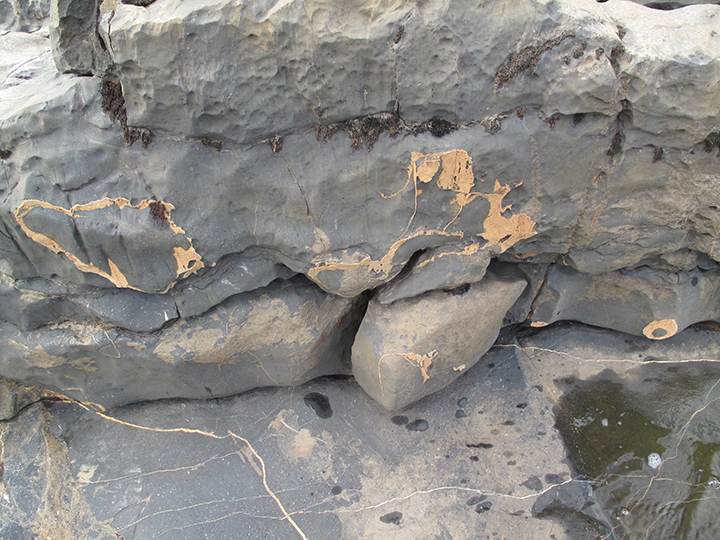
Antony tells me that this – about the size of a slightly squashed half football – is possibly the fossil remains of  a tabulate coral (or something similar!) This extinct coral almost always formed colonies of individual hexagonal cells defined by a calcite skeleton like a honeycomb. They lived entirely during the Paleozoic period and are characteristic of the shallow waters of the Silurian and Devonian periods. But as transgression occurred during the Devonian tabulate corals became less and less common. They finally became extinct in what is known as the Permian-Triassic extinction event. But even if it’s the fossil of a different coral, the point remains the same.

And here one is now, millions of years and 300 metres plus, sitting embedded in a stone sill in Co. Durham.

Cliff (Clifford) McLucas

I am delighted to discover that there is now a web site devoted to the work of Cliff MacLucas, whose “Ten Things I Know About These Deep Maps” has been a really important source of inspiration for the deep mapping work I’ve been involved in over the last fifteen odd years, along with the work of Mike Pearson.

The new web site, which grows in large part out of work done by Dr Rowan O’Neil, a Lecturer in the Department of Theatre, Film and Television, at Aberystwyth University, can be found at: http://www.cliffordmclucas.info For those who are interested in hearing the man himself there is also the video at: http://metamedia.stanford.edu/~mshanks/threelandscapes/Map-on-a-wall-video.html

Slide1

Walking in the City

IMG_7885

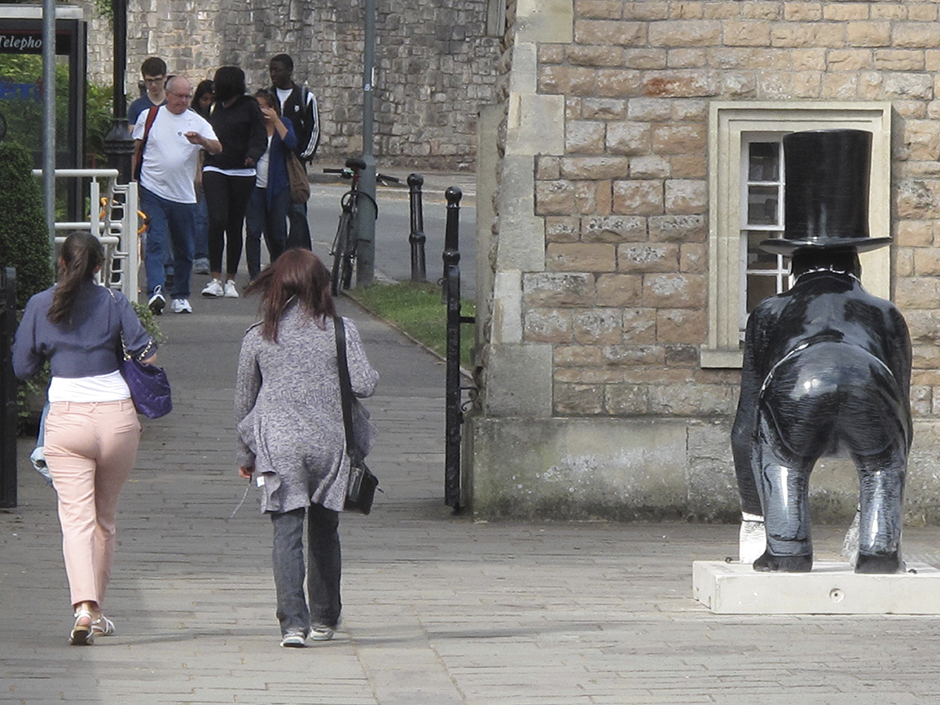
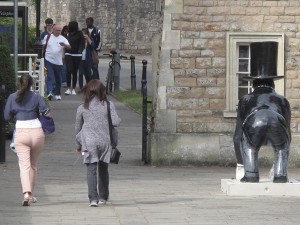
Mel Shearsmith and I have been working with the Parlour Show Rooms in Bristol on a four day event focusing on walking and talking, which will also involve the initial stages of what I hope will become a Bristol deep mapping project. We are very sure it will be more interesting the the annual influx of fibreglass animals that Bristol seems to go in for now (see above).

Here is some information about the event.

A FOUR DAY WALKING EVENT EXPLORING BRISTOL

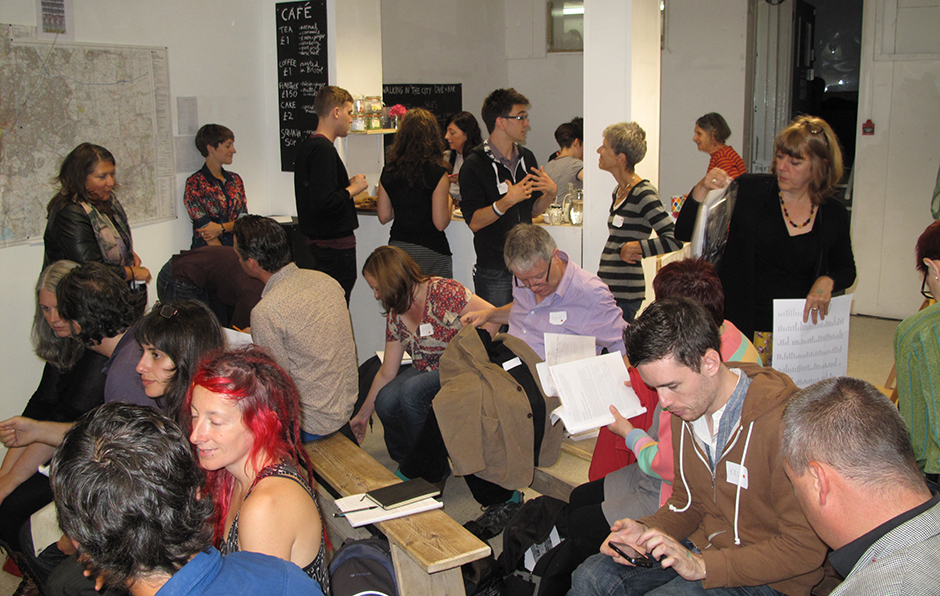
Walking in the City is a unique four-day event exploring Bristol through artist led walks, talks, discussions and an evolving exhibition, curated by The Showroom Projects and PLaCE research centre. The four day event takes place over 12-15th September and explores how walking and talking can change our experience of the city.

Walking In The City is an international gathering of walking artists, enthusiasts and academics at The Parlour Showrooms, in Bristol. This micro walking festival offers an extraordinary programme of performance, talks and an evolving exhibition. Over the four days audiences are invited to create time/space for imaginative wanderings, meditative practice and serious play.

Artists; Phil Smith, Simone Kenyon and Simon Whitehead invite you to join them on walks around the city to re-imagine the every day, explore ideas of the collective, and question what it means to playfully engage with and see the city anew. All events welcome visitors to Bristol, as well as those who think they know this city like the back of their hand.

The event is centered in and around The Parlour Showrooms, which will act as the cafe hub for the duration of the four days whilst also providing the forum for artists Sarah Rhys and Sue Maude to begin a process of ‘deep-mapping’ Bristol. Through this process they will explore the ancient city boundaries, investigate the hidden city waterways, and invite visitors to contribute to an evolving exhibition on the walls of The Parlour Showrooms.

On the first day (Thur 12th) Phil Smith will open Walking in The City with ‘Crabbing in Bristol’; a derive, or ‘drift’. Described by the artist as an: ‘exploratory, destination-less wander through (usually) city streets, detecting and mapping ambiences, walkers’ subjective associations and those emotions and atmospheres ingrained in the urban structure and texture’. Each dérive is unique, and finds its own duration; ‘Crabbing in Bristol’ could last up to 7 hours. After having lived in Bristol for twenty years and now based in Devon Phil is, ‘looking forward to being a stranger here once more’.

The second day (Friday 13th) is devoted entirely to a day long symposium; a sharing of research and discussion in and around walking artistic practices. Entitled: ‘Mapping Borders’ curated and chaired by UOB researcher Cara Davies, the symposium brings together artists and academics from all over the country to discuss practice and research. During the day there will be five panels of speakers including acclaimed academics and artists such as; Stephen Hodge (Wrights and Sites), Misha Myers and Dee Heddon (Stories from the Walking Library).

The third day (Saturday 14th) welcomes internationally renowned artists Simone Kenyon and Simon Whitehead. In the morning Simone leads a walk together in silence to the cities borderlands, whilst in the afternoon she runs a workshop to practically explore embodiment and walking. Simon Whitehead leads a group in search of a place, where together they can howl into the night.

The fourth and final day (Sunday 15th), offers a welcoming and reflective space for brunch and a talk, led by two walking artists/researchers; Jess Allen and Mads Floor Andersen. Here they return to the central question of ‘how can acts of walking and talking affect our experience of the city?’ Following on from this Tim Higgins, Canon at St Stephens church in Bristol, will lead the final walk of the four days, to find the hidden medieval walls of Bristol; hinting that perhaps the ‘stories of the Old City are not locked in time but can be set free to refresh our times’.

Walking In The City is the third event of the In The City Series, a performance programme held in two empty shops on College Green in the centre of Bristol, curated by The Showroom Projects.

The vision behind In The City Series is to hold an open space in the centre of Bristol to consider the questions: what does our city centre mean to us? What is the future of our high street? How do the borders of our city relate to the centre? The series aims to engage new audiences as well as provide access to artistic excellence.

Mel Shearsmith, PLaCE curator said:

‘WALKING IN THE CITY is part of PLaCE’s larger ongoing project to build links with organisations like The Showroom Projects and between people engaged with the ecologies of place, the arts, and relevant academic work.  PLaCE – as part of the recently reconfigured PLaCE International (UK) – is pleased to be co-curating Walking in the City as part of its continuing commitment to facilitating interaction between the performing and visual arts, to engage new audiences and to explore place through diverse walking practices in the South West and beyond’.

Canon Tim Higgins said:

My experience is that telling stories can enchant me and open my imagination. But stepping out and walking inside the space, that is the deep gift of the city; story has the power to change my world view. How I view the world nurtures the seeds of my energy for change. I think what is amazing is we can really get inside that transforming space.
 

Transgression, or: …

IMG_0435

Transgression, or: ‘The Master’s Tools Will Never Dismantle The Master’s House’.1

In the essay that gives me the second half of my title, Audre Lorde asks: “what does it mean when the tools of a racist patriarchy are used to examine the fruits of that same patriarchy”? Later she also states: “survival is not an academic skill”. I need to return to these and other of Lorde’s observations because they help me ponder concerns that press in on me at present, following a wonderful period of new experience and exchange in Dundee. And of course the crux of the matter that troubles me is captured in this observation: “… the master’s tools will never dismantle the master’s house. They may allow us temporarily to beat him at his own game, but they will never enable us to bring about genuine change”.

As so often when I get back from a powerful event shared with old friends and with exciting new contacts, I find myself pondering my own multiple connections and my ‘work’ (not primarily in the economic sense, but that other business of engaging with the mesh of connectivities we call ‘the world’). This questioning also relates to the Transgression film I’m doing with Antony Lyons, admittedly mostly through field trips, conversations and emails to date. This questioning has now been amplified further by reading the draft of an essay by the New Zealand/Irish artist Cathy Fitzgerald (in which she quotes some of my thoughts about ‘raw beauty’ published on this site). Cathy and I have just met up with each other again at Invisible Scotland in Dundee, a truly wonderful event – half academic conference, half locally led ‘walk-about’ – put together by the incomparable Mary Modeen. Cathy’s essay, which I found generated more serious food for thought, will appear later on her blog: beyond ecocide toward deep sustainability: stories from a small Irish forest.

Two things impressed themselves on me in Dundee which relate to all this. The first is that there is now a whole emergent ‘younger’ generation of people in dialogue with the PLaCE International / Mapping Spectral Traces network nexus. This includes graduate and doctoral students, ‘young’ and ‘established’ artists, and interdisciplinary folk of various persuasions more than able and willing to contribute to the development of the networks’ concerns. But, as the Dakota activist Mona Smith reminded us during the co-ordinators’ meeting afterwards, there is less dialogue with, and inclusion of, the ‘local’ people with the greatest knowledge of the places with which we are concerned than there should be. I will return to this later.

The second thing that impressed me is that there is now much more open disagreement – ‘dissensus’ if you like – between members of the core group than there used to be. This seems to me a very positive situation for a number of reasons. When we first got together as a group, it was very much for mutual support in what was then – for academics with our concerns and orientations – a disinterested and often openly hostile environment. That has changed, at least in some of the places we work in, as issues of interdisciplinarity and ecology have become more visible. (The old problems have, however, often simply taken new forms – not least in imposing impossibly heavy workloads on people already doing more than their fair share of work for the institution). What has changed fundamentally is our ability to articulate our collective confidence in what we do and, alongside that, our greater willingness to debate our differences rather than stress our commonalities.

One of those differences is, I think, very much to do with how we each understand ‘community’, an understanding that is inevitably closely bound up with our particular contexts – physical and otherwise – our aspirations and inheritances. Community as part of lived experience is, for example for Mona and myself, inevitably something very different. My personal concern is how, as disparate people with shared concerns, we now negotiate our differences in this respect. This is, at least for me, an intensely practical question to do with how time and energy are used.

Which brings me to the issue of transgression. Antony and I originally thought of this in geological terms – environmental events during which the sea rises in relation to the land so that the shoreline shifts upwards, covering more ground and resulting in flooding. This issue of land lost to the sea is clearly one of the major impacts on human habitation resulting from climate change. However, because of discussions and a particular shared experience of ‘silver bullet’ thinking being used to dismiss Antony’s suggestion that we need to focus more on preparing to undertake major adaptions to every aspect of our way of life and less on ways to preserve the status quo, ‘transgression’ has now become the centre of a whole mesh of linked understandings and concerns.

An unnerving part of all this is the privilege that derives from our investment in professionalism – artistic or otherwise – and in academic knowledge. What indeed does it mean today when the tools of a global economy run by a racist patriarchy – not least among which are the professional worlds of culture and the university – are still used to examine the fruits of that same patriarchy? And if it remains the case, as I think we know in our hearts, that “the master’s tools will never dismantle the master’s house” and, indeed, more and more rarely “allow us temporarily to beat him at his own game”, then what are we going to do? If those tools – of disciplinary academic knowledge and state-sanctioned and funded ‘transgressive’ art, for example – “will never enable us to bring about genuine change”, surely we need to think carefully about how we use these tools and whether it is perhaps time to forge some new ones of our own? While I accept that we may need to use our privileged access to the master’s forge and workshop to do so, we need to be very clear that we really cannot have our cake and eat it.

As I have now argued both in recent texts and at public events on a couple of occasions recently, it seems to me that we (those of us who have the privilege of working as artists and academics) have to give something up in order to contribute to trying to dismantle the master’s house, to make the space necessary for real change to come about. This ‘something’ is, I think, the engrained attitude of ‘possessive individualism’ that dominates and determines the reality of the art world and the academy. Until we address this the matters that are central to Guattari’s third ecology – that of those constellations we call the ‘self’ – will remain an intractable problem that undermines our efforts at the social and environmental levels.

And this returns me to something Joseph Beuys said to me shortly before I graduated as an art student. “Always remember, education is more important than art”. But not, perhaps,education as managed by the university as it now manifests itself?

Thinking ecological contingencies – the river as metaphor

IMG_8800

In my ongoing exchange with Antony Lyons (which is partly reflected on his web blog at http://antonylyons.blogspot.co.uk), I find myself coming back again and again to the problem of our culture’s lack of flexibility and adaptability, particularly in the face of the ecological and social implications of climate change.

The ‘why’ of this complex attitudinal situation is, at one level, very much tied up with our obsessive belief that things will soon go back to ‘how they were’ as long as everyone except the super-rich tighten their belts so that the country as a whole can return to that persistent oxymoron: ‘sustainable economic growth’. In reality, of course, we know that those who benefit most from capitalism (and that includes a very significant percentage of those in the so-called ‘first world’), now have a problem. The exploitation upon which capitalism depends has run up against increasingly intractable limits in terms of the natural world. As a result those who manage it are now hell-bent on cannibalising human society itself in order to keep the profits flowing in. In ecological contexts this belief in the continuity of the status quo is mirrored by a related belief in technological or legislative ‘silver bullets’ as a solution to all our problems- anything, that is, that doesn’t require ‘us’ personally to adapt ourselves to changing circumstances. (I find it particularly worrying when artists, academics and others in positions of cultural or educational authority – who after all might be said to be paid, however badly, to think ‘outside the box’ – simply parrot this kind of nonsense). But all this is also a product of a particular cultural mentality that is reinforced by, among other things, a blindness to the centrality of contingency, flux, and complexity. A blindness into which we are actively inducted by many aspects of our current, disciplinary-based, education system, with its singular inability to grasp the need for a thinking that draws on multiple perspectives and the experience of multiple constituencies (rather than simply the ‘professional’ viewpoint). The lack of flexibility inherent in this mentality is likely, unless addressed at every level, to be quite literally the death of us as a society, if not as a species.

I have to come clean and admit that my current levels of irritation with the narrowness, the inflexibility of academic institutions, administrative officialdom, and the status quo more generally, has been rather aggravated recently. For example, I was asked by the university for which I worked full-time for over thirty years to produce my passport in order to prove that I have the right to work in the UK. This is apparently an official requirement now I have a part-time contract in order to carry out ongoing doctoral supervision. I am told this check is a mandatory requirement predicated on government regulation. Failure to comply will mean that I will not be paid. However, I find it odd that I have regularly carried out similar occasional work for other institutions and, presumably because I am well known to them, have not been subjected to this small, but nevertheless indicative, indignity.

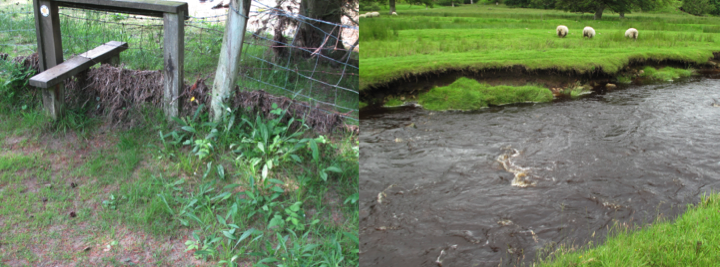
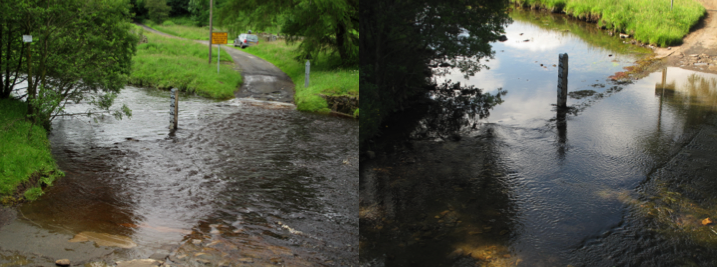
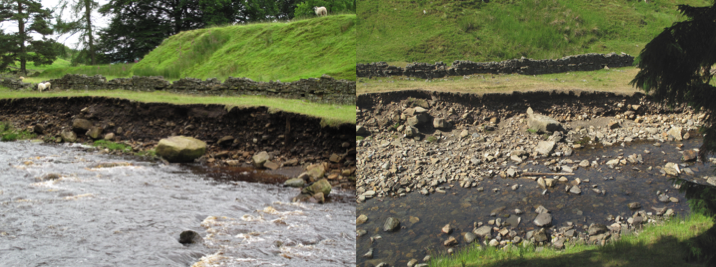
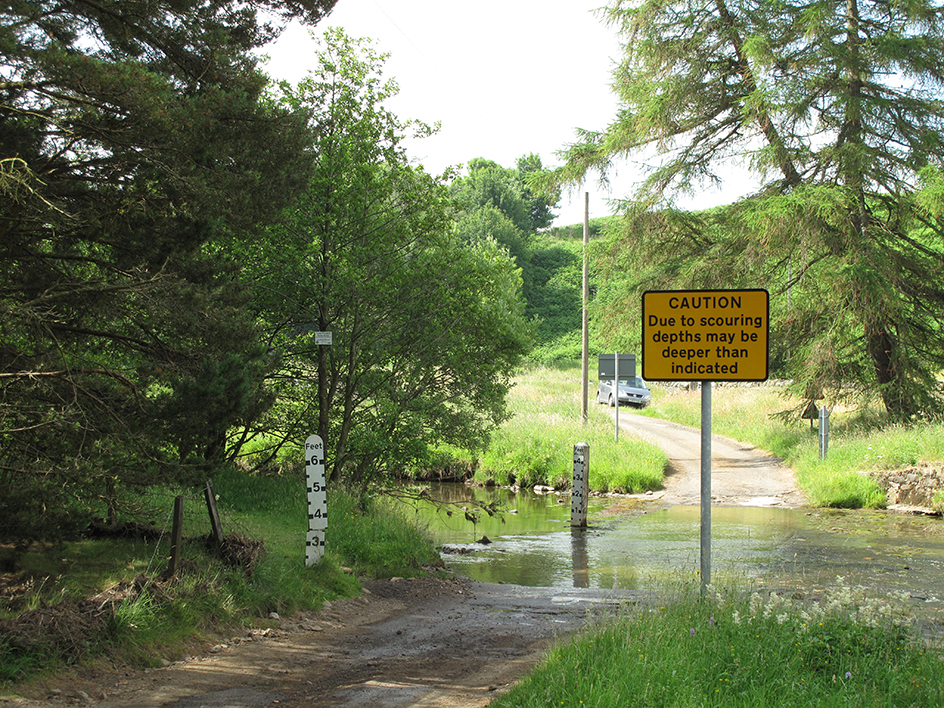
In pondering this example of a certain type of inflexibility (one might also call it petty-spiritedness), I come back again and again to something I experience regularly: the particular qualities, nature and power of water, both very literally in terms of flow, erosion and flooding but also, and perhaps as importantly, as metaphor. In this context I’ve recently visited, and have subsequently been thinking about (or maybe, more accurately, with?), a short stretch of river – known affectionately as Old Man’s Bottom – near Allenhead. (It’s much frequented by fishermen, which may account for the name). On a couple of occasions recently I’ve walked there with my wife Natalie and been reminded that each time we return it is not quite the same river as before. Yet its constantly changing nature and the various shifts and traces that mark this are precisely what gives me some sense of its essence as the river that it is.

river 2

river 1

Slide3

IMG_0094


Activating The Gap

IMG_0004

The artist and water scientist Antony Lyons has just copied me into an email to our mutual friend Simon Read – one of the instigators of the recent Activating The Gap event at Middlesex – an event I’ve written about previously here – that aimed to promote multi-disciplinary and multi-constituency work that includes the arts in environmental contexts. Antony wants, as I would imagine anyone who attended that event would do, to encourage Simon and his partners to build on what they have begun. In particular he urges Simon to make the concept “into something substantial, and enduring”. This is in part animated by an acute sense of how difficult it can be to use the impetus of such events to move things forward. As Antony rightly adds, he and I missed the opportunity to build on the evident energy of the Catchment workshop we put together out of initiatives we were trying to develop with Steven Sodek in Bristol before his resignation from the Council there, and suggests that the Activating The the Gap event “could develop into a London – Bristol – Falmouth nexus”. But, as he also notes, “there are of course lots of ‘players’”. I’m not sure whether this isn’t part of the problem. Although I have an encouraging sense of networks being extended and alliances forged, I worry about where the funding to turn these into a substantial initiative is going to come from.

Obviously I’m very pleased to hear from the eco-artist Cathy Fitzgerald that she has recently met Liz Adamson and Graeme Todd from Polarcap[1] in Ireland, and that she is going to meet Tim Collins and Reiko Goto during a stop-off in Edinburgh on her way to the Invisible Scotland event in Dundee at the beginning of August.. [2] As someone who combines being a doctoral student, a Green Party activist and eco-artist focusing on forests – she manages a small one of her own – she obviously needs to be making these kinds of contacts. We also clearly need more such committed and energetic people. But how is that commitment and energy to be directed so that it has the best possible effect?

I’m aware of just how hard it is for people like Simon, Liz and Graeme to take up the demands of pushing forward in practical ways to develop multi-disciplinary and multi-constituency ecological work that includes the arts in addition to teaching, research, their creative practices and the innumerable demands of everyday life. Artists prepared to work to provide an acceptable face for the shadowy world of the medical techno-science industry have the economic clout of bodies like the Welcome Trust and all the tacit support of various lobbying organizations/”press agencies” behind them. But where is the equivalent support for the multi-disciplinary, multi-constituency thinking that animates the best eco-art?

It’s almost certainly not going to come from the universities themselves, no matter what individual academics are managing to achieve (often despite, rather than with the support of, their institutional managers). As Professor Ferdinand von Prondzynski, Principal and Vice-Chancellor of Robert Gordon University, has indicated that while universities are supposed to be the prime generators of ‘new knowledge’ in our culture, they are currently among its most reactionary and conservative institutions.[3] This is a situation that he also very properly links to the fact that both their pedagogy and realpolitik (as opposed to their public rhetoric) are almost entirely determined by a professional and academic status quo that is dependent for its power and influence on the perpetuation of disciplinary thinking.[4] Add to that the profoundly reactionary and reductive government interventions provided by the likes of Michael Gove and the struggle to build a serious consensus on the basis of such initiatives as have been begun looks like being very long and hard indeed.

The next gap we need to activate then is that between the potential identified and action initiated by the people mentioned her and others like them and those with the ability to link them to the funds necessary to help develop that potential – an equivalent to the Welcome Trust for the arts and ecological sciences if you like.


[3] von Prondzynski, F http://universitydiary.wordpress.com/about/ (accessed 10/11/2012)

[4] von Prondzynski, F (2010) A post-disciplinary academy? http://universitydiary.wordpress.com/2010/10/14/a-post-disciplinary-academy/ (accessed 10/11/2012)