Leonard Jason’s ‘Principles of Social Change’

river

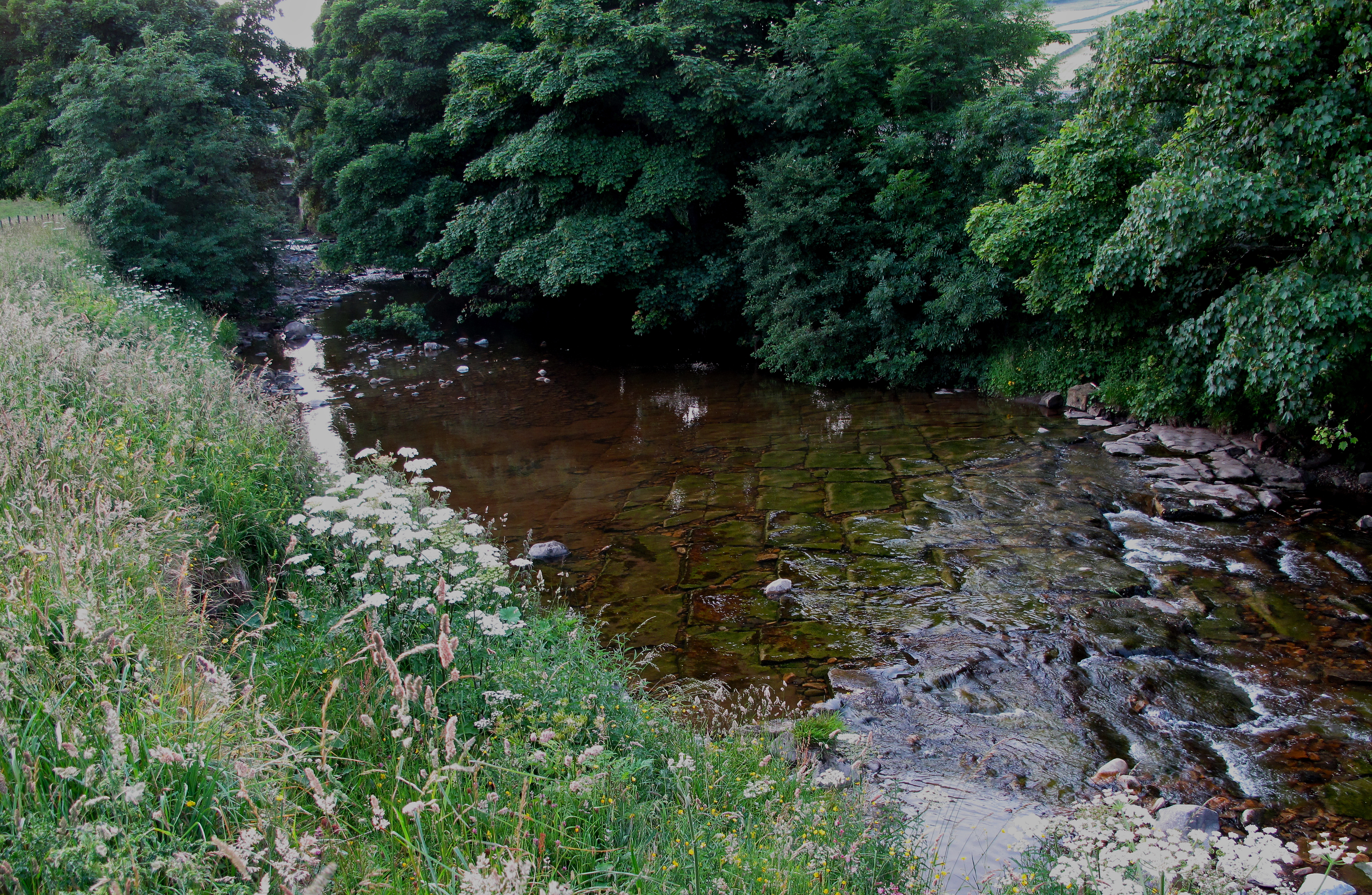
I’m currently briefly in County Durham on holiday – this is ‘our’ river – and am just finishing reading an extraordinary book – Leonard Jason’s “Principles of Social Change” (published 2013 by Oxford University Press). This examines how a five point approach – very briefly: focusing on second-order change, identifying and weakening the power holders, creating coalitions with communities and other activist groups, persistence and long-term engagement, and constantly evaluating and refining strategies and tactics – has served him in a life-time’s engagement in community activism. I’m particularly interested in what he has to say because in many ways it relates to current debates about ‘participatory’ and ‘socially engaged’ art and, additionally, supports and extends what I’ve been saying about the need for externally facing interdisciplinary/multi-constituency arts-led research work, ‘ecosophical’ collaboration, communities of transverse action, and so on.

I met Prof Jason – who directs the Centre for Community Research at DePaul University in Chicago – through helping my wife Natalie and son Josh on their film Voices from the Shadows. I collected them all and drove them across London so they could interview him on his way to a conference. In the book he references Natalie’s book Lost Voices in his discussion of Chronic Fatigue Syndrome. He’s an extraordinary man and it’s a very impressive book. It is very simply and directly written, is measured while pulling no punches, and I would highly recommend it.

I have now added a summary/review of this book on a separate page.

IMG_9746

In my presentation at this event I spelled out something that it seems to me we need increasingly to understand and act on, as follows:

“Recently the Irish artist Pauline O’Connell described herself, in a barely ironic tone of voice, as a ‘composite cur’. She was referring to the unexpected abilities needed to complete her Drawing the Water project – abilities that far exceeded those conventionally identified with art practice. We know that dogs range from ‘best of breed’ – the product of an economics of exclusivity – through to ‘composite curs’, sometimes valued for their adaptive intelligence and multiple skills. ‘Best of breed’ dogs exist to exemplify a rarefied category set up by the Kennel Club and might serve as an allegory for our hyper-specialized disciplinary culture. ‘Composite curs’ don’t exemplify anything. They thrive on responding to contingency, perhaps reminding us that, in Geraldine Finn’s words: ‘we are always both more and less than the categories that name and divide us’. My assumption here is that, as with dogs, so with people”.

I very much enjoyed working with the group of people selected by Simon Read, Ralf Nuhn, Sue Tapsell, Simon McCarthy (Middlesex) and Chris Wainwright (University of the Arts), since we all had a real interest in the way in which the arts might be used to engage the public more effectively with issues of flooding and climate change more generally. By helping to bring people in the arts into a practically-focused dialogue with hydro-social issues, the organisers have now created a more practical and productive relationship between water professionals, academics engaged in water studies, and appropriate artists.

The event was very positive, with internationally-established artists like Lillian Ball, Tim Collins & Reiko Goto, and Simon Read providing examples of art-led engagement with environmental issues in general and hydro-social issues in particular. It was vital to the event that the attendees were from across the spectrum of possible interested parties – ranging from Tim O’Riordan (Emeritus Professor of Environmental sciences at the University of East Anglia), David Cross (of Cornford and Cross), Heather Shepherd from the National Floods Forum, Julie Steward (an artist working on local waterways), the geographer Caitlin DeSilvey, Antony Lyons (an artist and scientist who formally worked with the Environment Agency), and Fanshawe (an artist and environmentalist working with BirdLife International), in addition to academics and people from relevant national bodies.

It is already clear that some of the links formed are likely to be practically productive and, in addition, reinforce and extend previously existing links in this field created by the PLaCE  water seminar I organised with Steven Sodek – at that time in charge of flood policy for bristol City Council – Mel Shearsmith, and Victoria Walters here in Bristol in 2011.


Activating the Gap between Knowledge and Imagination – 1

I am about to spend three days in London at a series of invitation-only workshops looking at: “the potential for the arts to enter into partnerships with scientists and flood risk and environmental management communities, social science and cultural geography communities, local, regional and national government organisations towards the development of both sustainable policy and practical application”.  This event is organised in part by my old friend Simon Read, along with Ralf Nuhn, Sue Tapsell and Simon McCarthy from Middlesex University and Chris Wainwright at Chelsea School of Art. There are overlaps in core concerns with the Polar Cap conference in Edinburgh where I gave a keynote recently and it will be interesting to see how this London event compares. I have the greatest respect for Simon as an artist and environmental campaigner and an innate suspicion of the London art education world, so will be trying to see past my own presuppositions and see whether there are any real possibilities for ‘transversality’ to develop.

My own short presentation is deliberately slightly provocative – a shorter and less nuanced version of the ‘ecosophical collaboration’ presentation I did in Edinburgh – and begins by picking up on Pauline O’Connell’s wonderful description of herself as a “composite cur”. Given that the original seems to have been very well received it will be interesting to see how the same approach goes down in the South East.

Field work

I am going out to walk along part of the Severn estuary with Antony Lyons today to look at potential material for a film we are making on transgression (in the geological sense). This fits into Antony’s on-going work around water, climate change and sea levels, and the whole issue of time and change, ecologically speaking. Walking and talking is also always a good means of reflecting on, sifting through, and generally sharing and digesting thinking material. Today’s trip has a particular feel to it because my friend the artist David Walker-Barker has just agreed to send me a clip of something that provided perhaps the most extraordinary experience of the complexity of geological time I’ve every had. While we were talking in his studio in Yorkshire one evening, David handed me a very large quartz crystal and told me to watch it carefully as I tipped it from side to side. Almost miraculously, as I did so I saw a small bubble of gas move in its liquid heart, much like the bubble in a spirit level. The paradoxical tension between the age and solidity of the crystal and that movement has always remained with me, as mysterious as the viral matter – inert but with the latent potential for life – that makes up part of the DNA of every human being.

Meeting Pauline O’Connell, announcing Invisible Scotland

Pauline O’Connell and I met yesterday to discuss her new project – I am acting as a mentor for its early stages. I’m very pleased to be able to do this (it would be great if ACE funded mentorships in this way) and am very much looking forward to seeing how the project – which concerns a publicly-owned field – plays out.

On Tuesday next week I fly to Edinburgh (again) in order to give a keynote talk on collaboration at a conference following up on an interesting ecological project called Steep Track. I am looking forward both to meeting Scottish artists and others working in this field and to catching up with Mary Modeen, who is also speaking at the conference, on all she is doing around the big Invisible Scotland event in Dundee at the beginning of August. This promises to be a really valuable international event. You can find information about it at http://www.uwe.ac.uk/sca/research/place/iscotflash.htm

Hi

Upland

Having stopped full-time work at the end of March, suddenly three weeks later I’m very busy!

This morning Mel Shearsmith and I had our first meeting to discuss a month-long contribution from PLaCE (UK) to a program of experimental live performance at The Parlour Showrooms. This will happen in september and I’ll put updates of our progress here as it happens.

On June 4th I start work with artist Pauline O’Connell, under a project development and mentoring scheme funded by the Irish Arts Council. Pauline has done some very interesting work recently (see Friends) and is going to be testing out ideas in a rural social  in relation to a local communally owned field near where I live in a rural context in north County Kilkenny.